ViralVibe
Converging Micro-Tasking Platforms and SMM Panels for Web3 Era
Mar 9, 2024 - 14 min read
OVERVIEW
Designing a Trust-Based Task Platform for Web3
About
ViralVibe is a decentralized microtasking platform connecting crypto entrepreneurs with real freelancers. It helps startups run effective engagement and testing campaigns, while giving freelancers a safe way to earn through verified Web3 tasks.
This case study walks through the design of the MVP, focusing on problems identified during real-world work with crypto founders and freelancer groups.
My Role
Lead Product Designer & Co-founder
Scope
Concept, Research, UX/UI, MVP Prototyping
Timeframe
6 Months, January 2023
Highlight
ViralVibe was created to bridge the gap between crypto project owners and freelancers through a decentralized platform.
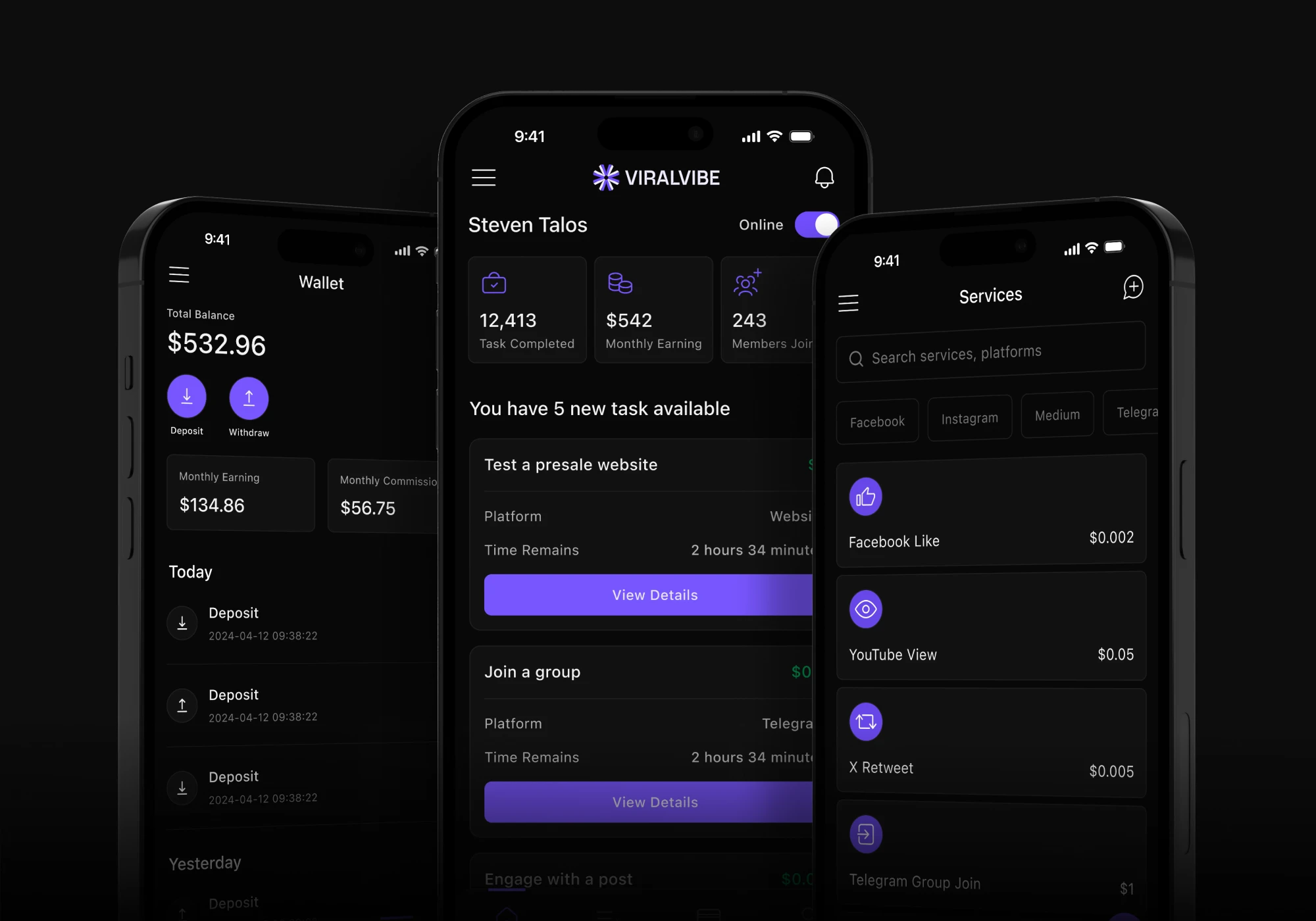
0.1 —ViralVibe screens
0.1 —ViralVibe screens
0.1 —ViralVibe screens
0.1 —ViralVibe screens
Problem Discovery
From Observation to Product Direction
While working on social campaigns for crypto startups, I noticed a clear pattern:
- Founders were spending on engagement services that used bots or fake accounts, wasting their budget and damaging credibility.
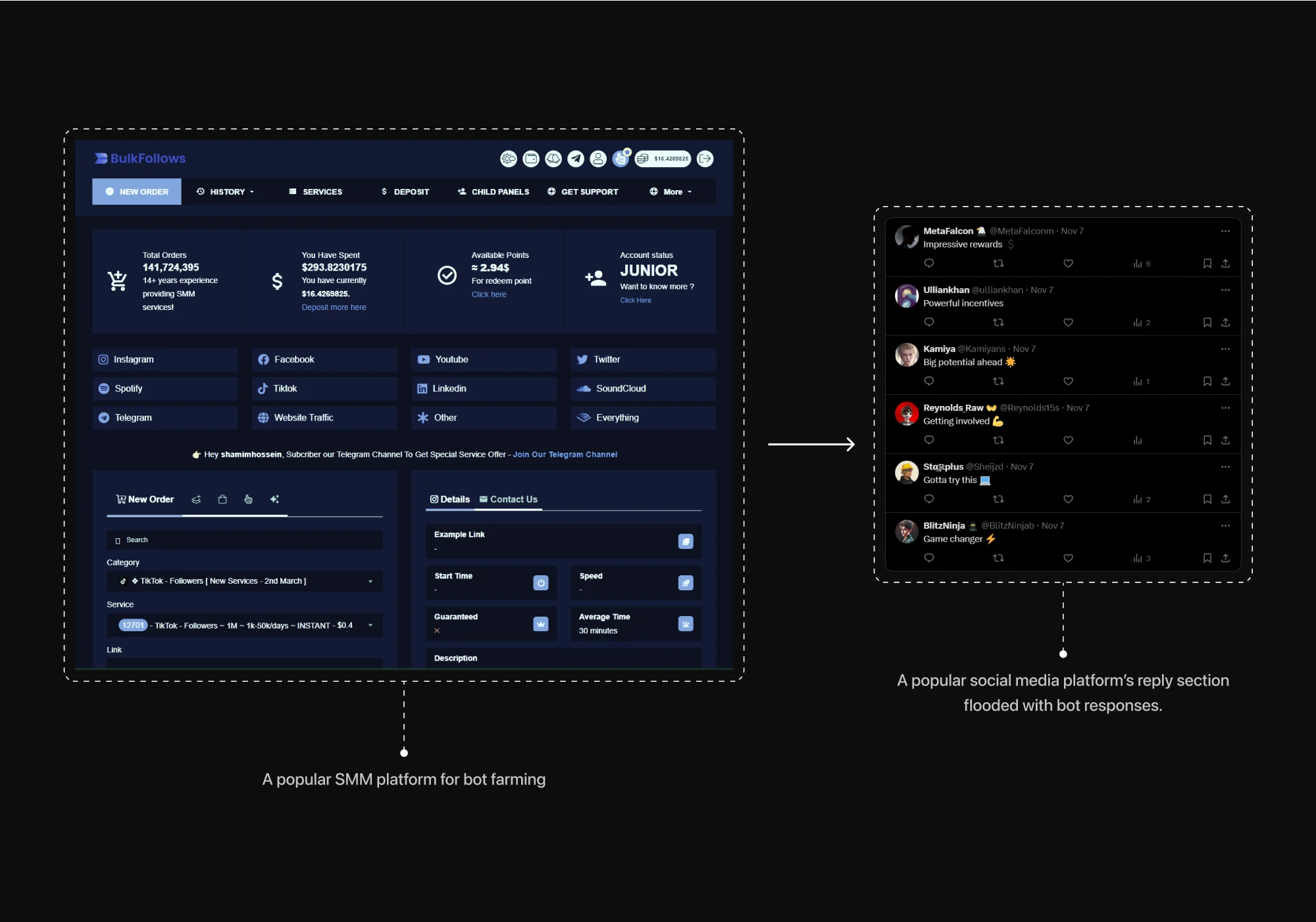
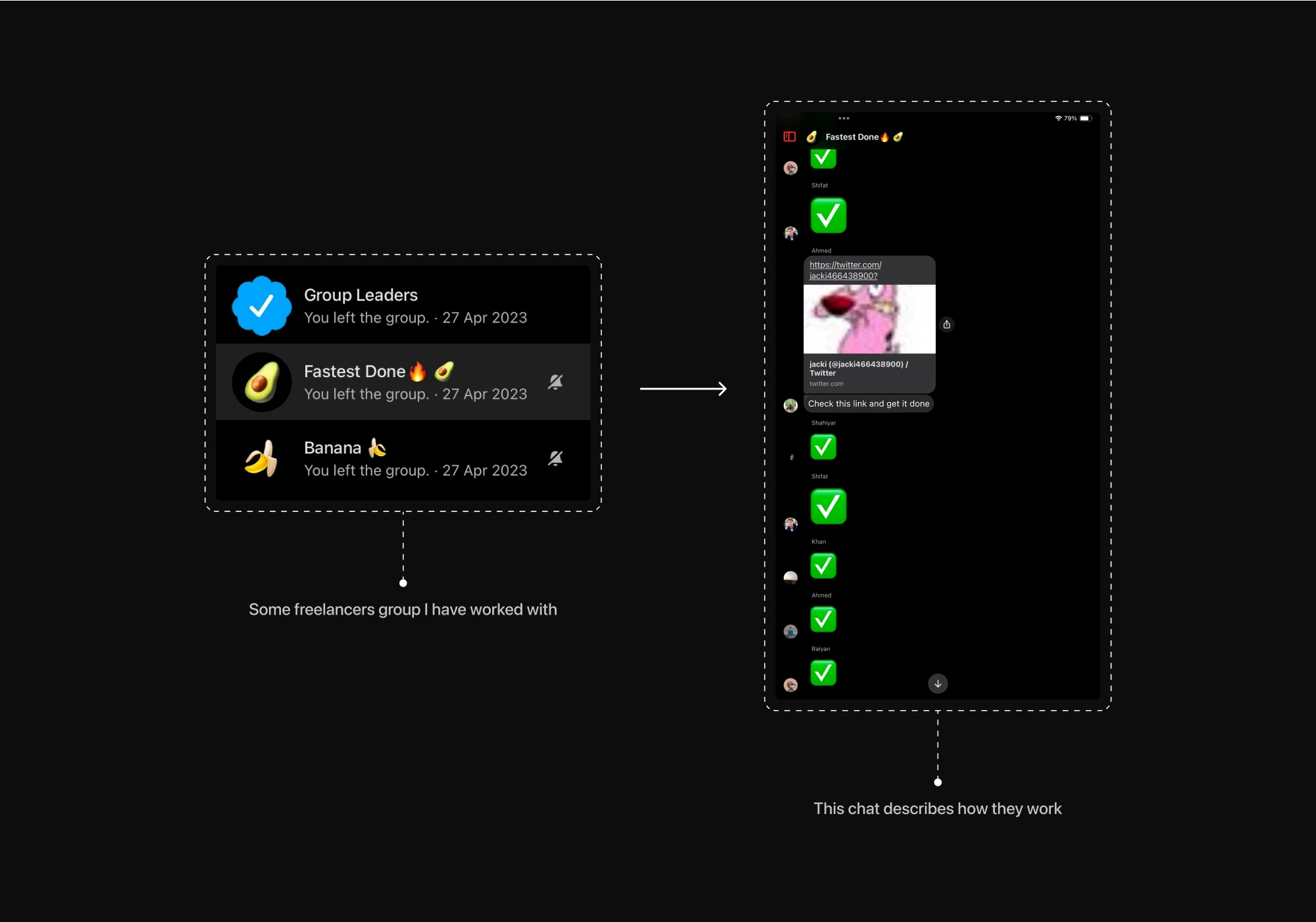
- Freelancers were doing work through Telegram groups and SMM channels, but often they weren’t paid.
There are many microtasksing, SMM platforms out there, but none focused on real human engagement for crypto. They don’t have any reliable way to match tasks to users, verify quality, or pay people safely. I often used to heard:
“We bought ‘X’ amount of engagements and got nothing but ghost traffic.”
The gap between effort and outcome, is what ViralVibe set out to solve.
0.1 — An example of what entrepreneurs get
0.2 — Inside of an freelancing group
Core USERS
Entrepreneurs
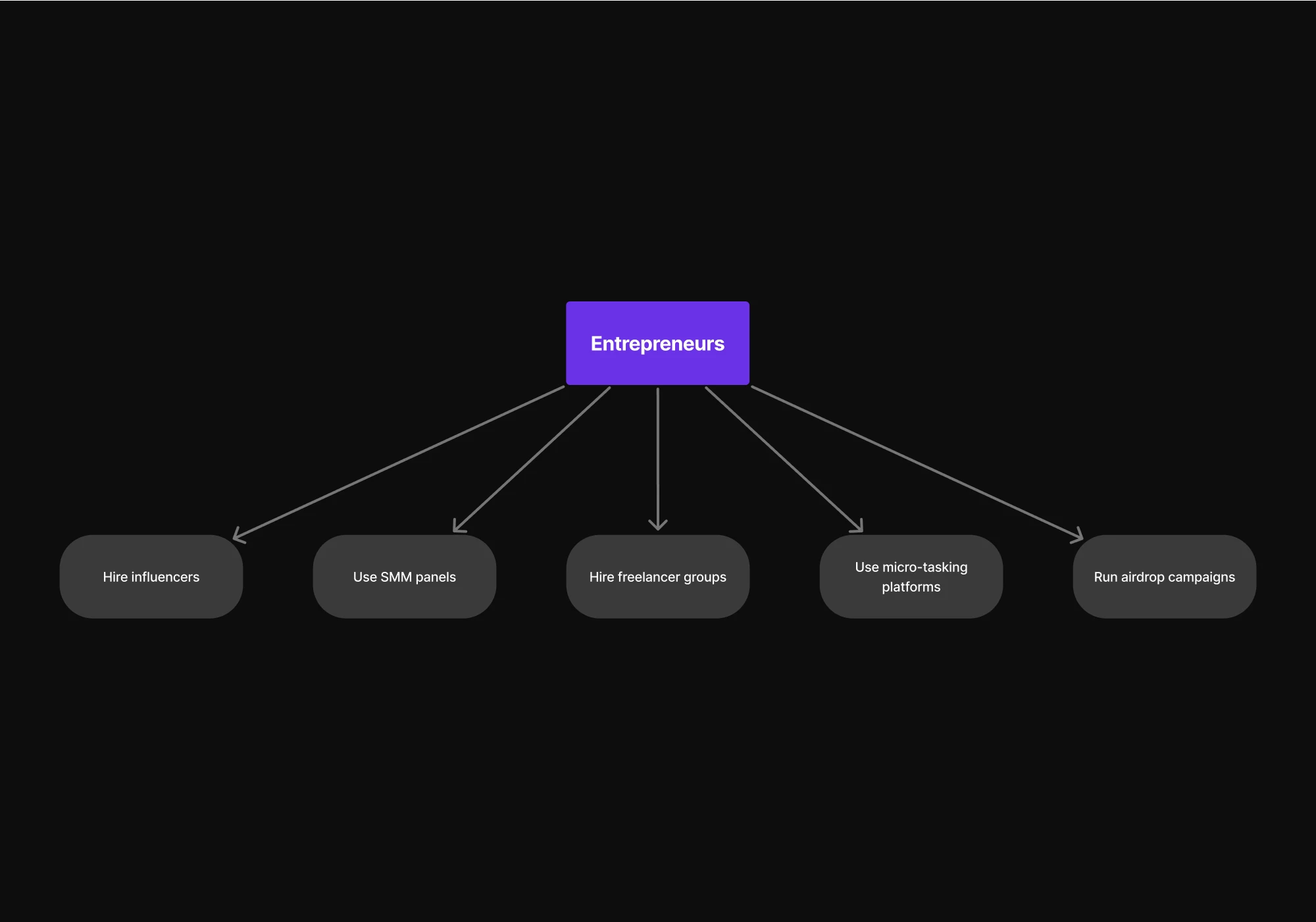
0.1 —Typical Journey of entrepreneurs
Current Behavior & Pain Points
Hire influencers for promotion, but there’s usually no proof of work, making it impossible to verify what was delivered.
Buy engagement from SMM panels, but the likes and followers are often fake, driven by bots that hurt trust more than they help visibility.
Work with small freelance teams, but lack of scale and inconsistent output makes these hard to manage.
They use general microtask platforms, but these don’t support crypto-specific workflows like DApp testing or token shilling.
Pay Telegram group admins to share updates, but these efforts rarely lead to measurable community growth.
What They Need
Get real people to do tasks, like testing and participating in communities.
Make sure tasks are done by humans, with proof they’re done right.
Pay only for the tasks that are done correctly.
Run effective marketing campaigns across different online platforms
CORE USERS
Freelancers
0.1 —Typical Journey of freelaners
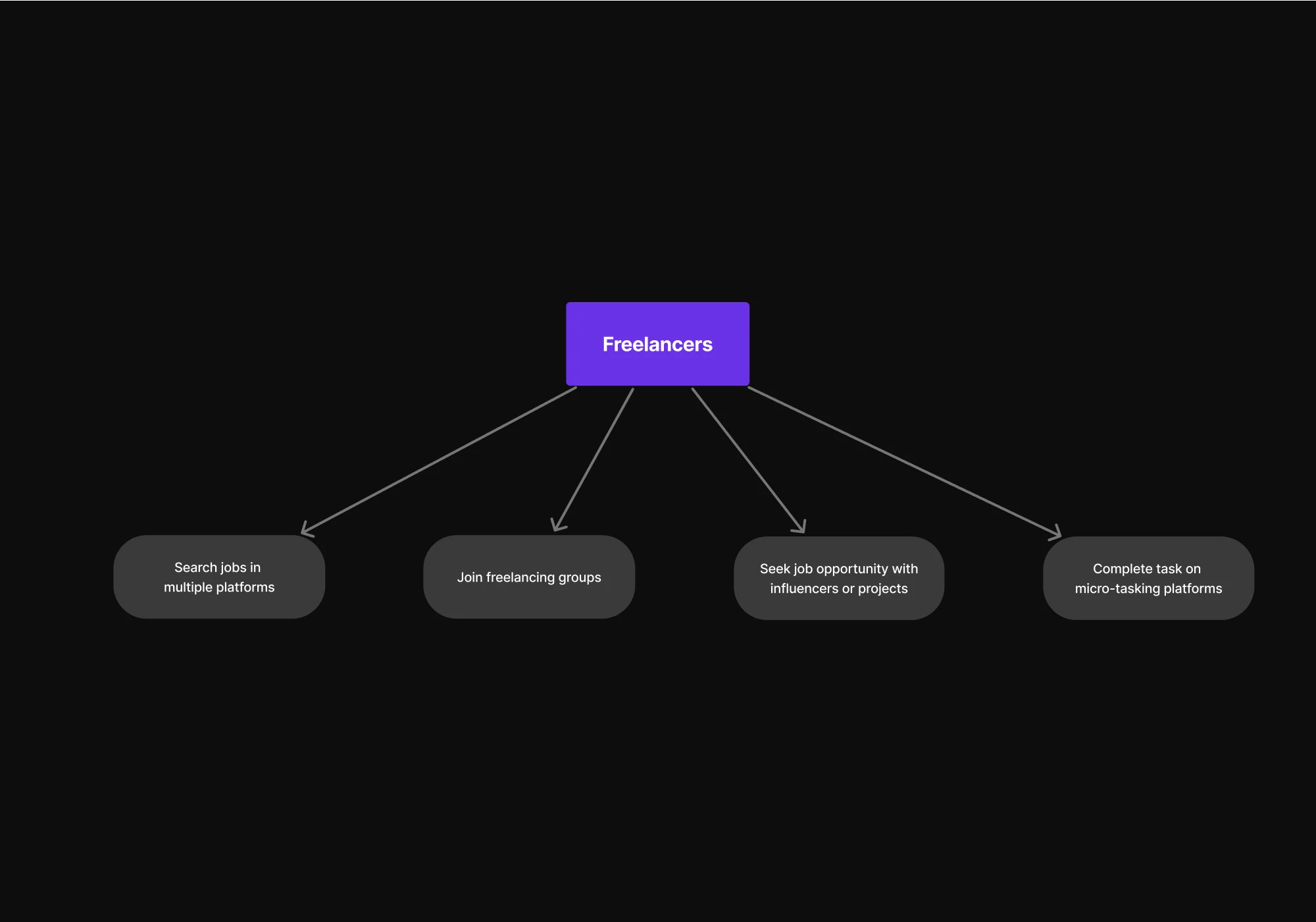
Current Behavior & Pain Points
Search terms like ‘Airdrops’ or ‘Crypto Jobs’ on websites, social media but waste hours filtering scams from real tasks.
Join task groups on Telegram or Discord, but get paid late or not at all. Also they are always vulnerable to rug pulls or phishing links.
Actively search for tasks on social media platforms like Twitter, Telegram, and Discord using relevant hashtags such as #CryptoJobs or #Airdrops.
Complete tasks in the micro-tasking platform in a very chaotic way, which often have very minimum payout and no crypto benefits.
What They Need
Find tasks easily without worrying about scams.
Get paid quickly and withdraw funds whenever they want.
Learn more about crypto and how to do tasks safely.
Build a good reputation in the Web3 space for future work.
Market Gap
Competitive Analysis
With clear problems on both sides I started analyzing two primary markets:
- Microtasking platforms (Swagbucks, Swagbucks etc.)
- SMM panels (N1 Panel, BulkFollows etc.)
The goal wasn’t to copy them, it was to understand where they fail, and how we could do better for Web3 users. By examining representative platforms within these markets, I identified some critical weaknesses that shaped ViralVibe’s design.
0.1 — Viravibe VS Competitors
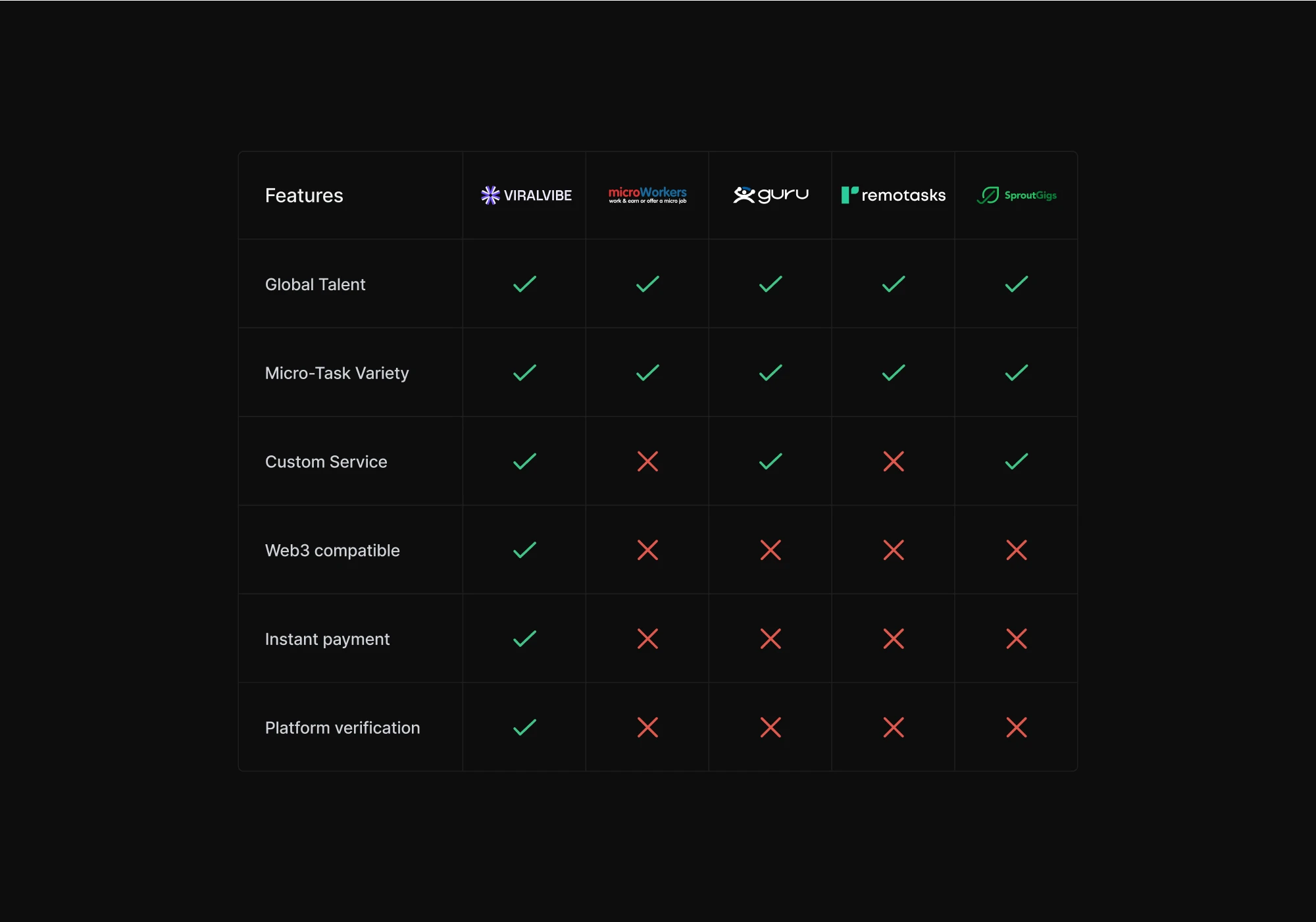
Micro-tasking platforms
No crypto context, no wallet connection, token payouts, or Web3 task types.
Poor onboarding experience, new users are dropped into dense UIs with little guidance.
Slow payouts is one of the most frustrating thing, freelancers often wait weeks to withdraw.
Manual task verification lead employers to waste a lot time checking submissions.
Social Media Marketing Panels
They use bots to provide thousands of fake likes/follows with no impact.
Buyers can’t see who completed what, because they don’t have any proof of work.
These platforms have zero transparency, no feedback or reputation system.
Most panels are clones of poorly designed user interfaces.
Design Objectives
Human-Centered
Real people should be doing the tasks, with ways to verify authenticity without micromanaging.
Built for Crypto
Stablecoin payouts. Wallet sign-ins. Crypto-native services. Not retrofitted Web2 systems.
Trust by Default
Onboarding, identity verification, task review all designed to create safety and reliability for both employers and freelancers.
Exploring Ideas
Shaping The Core of The Platform
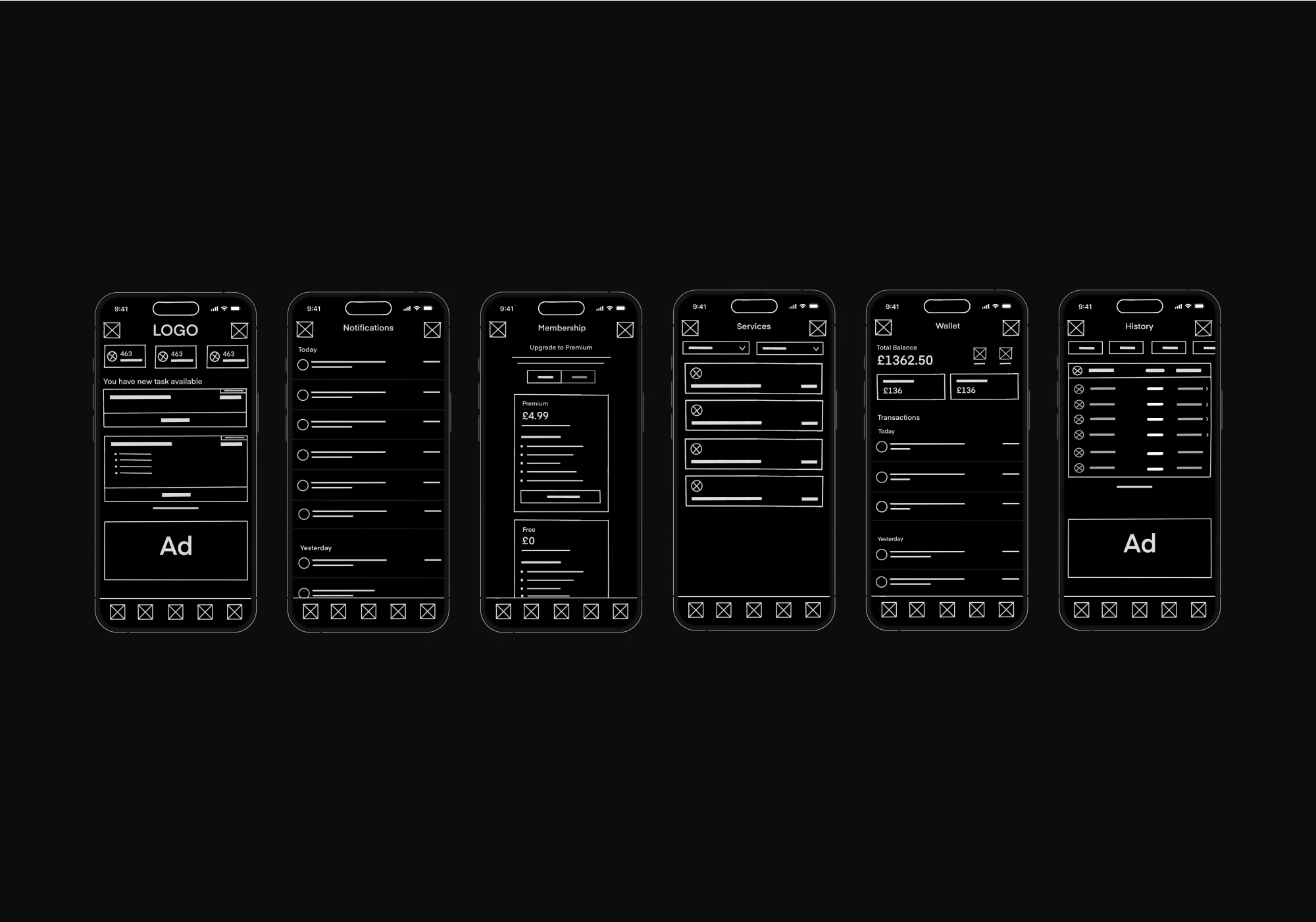
I started with quick sketches to explore how both freelancers and entrepreneurs would move through the platform. I wanted to explore how users find tasks, complete them, get verified, and get paid. These early visuals helped me shape the platform.
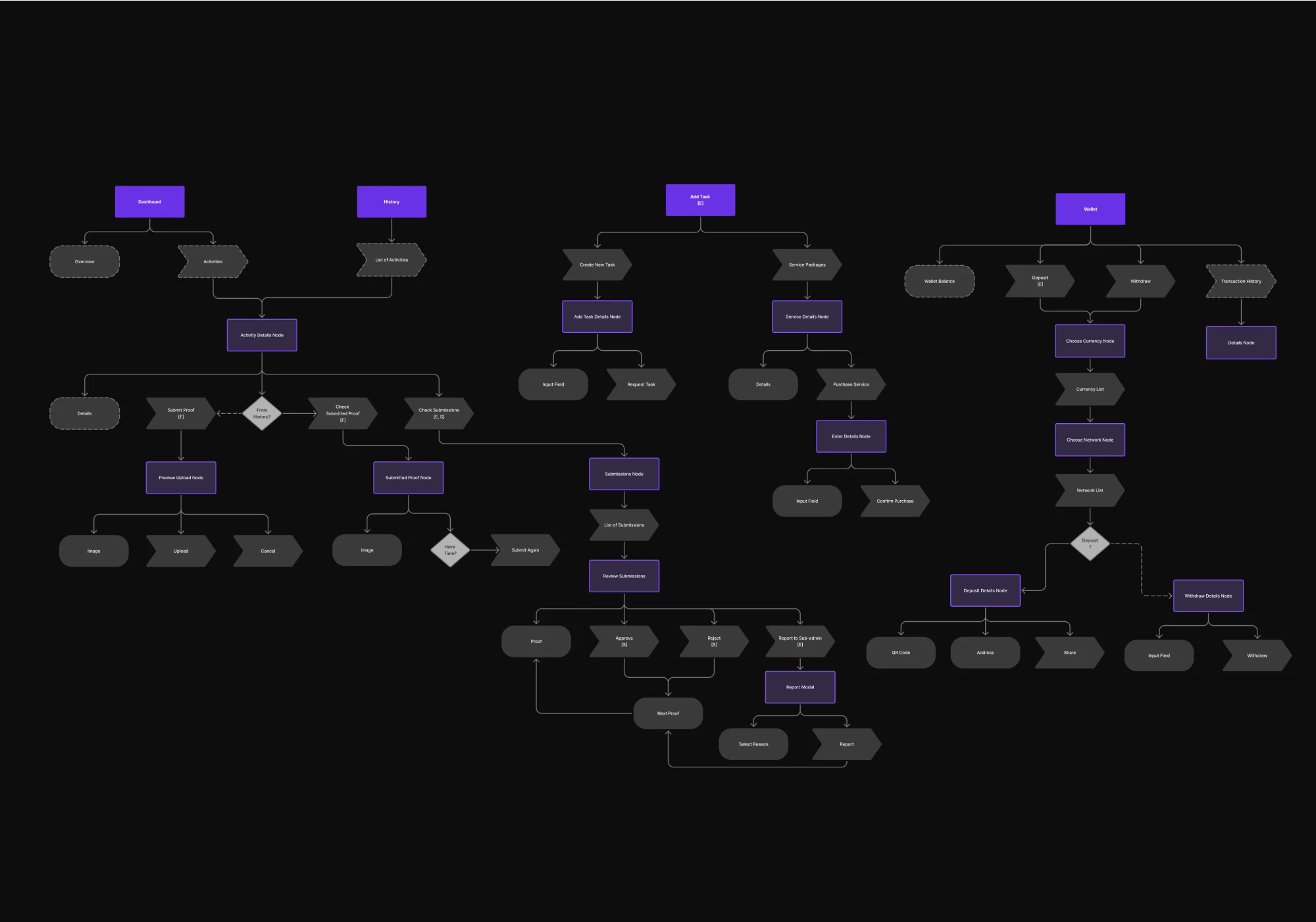
Once these journeys felt clear, I moved into structured user flows. This made sure that every interaction aligned with real user goals and expectations, especially for first-time users.
I kept these flows flexible enough to evolve with feedback, but clear enough to guide decisions as I moved into high-fidelity design.
0.1 — Some early-stage sketches (polished)
0.2 — User Flow Diagrams
Onboarding & Account Creation
Traditional micro-tasking platforms often overwhelm users with dense information during onboarding, leading to high abandonment rates and frustrated users. Imagine being bombarded with lengthy text descriptions and complex feature lists upon first entering an app. This lack of a user-friendly introduction results in users never experiencing the platform’s full potential.
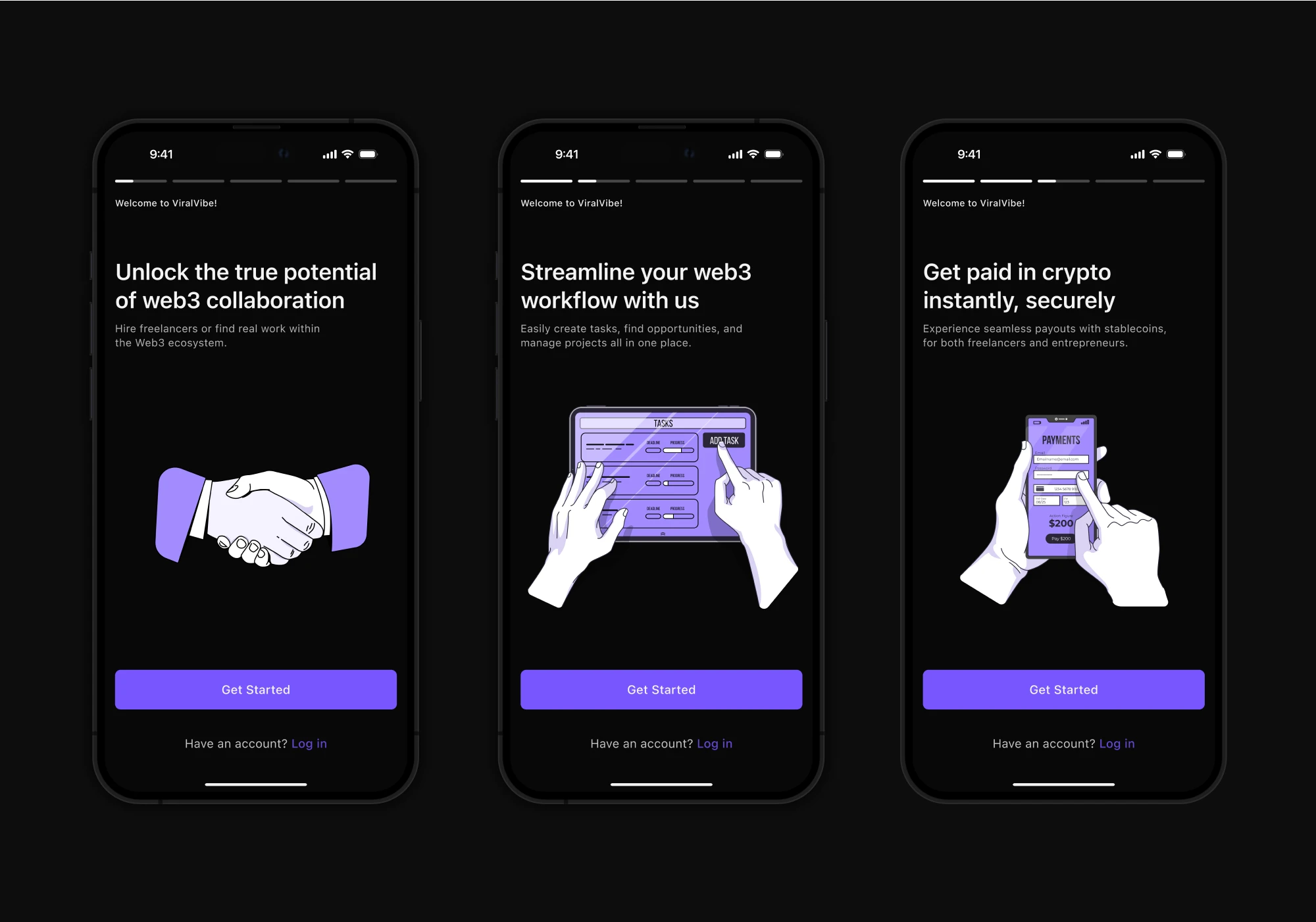
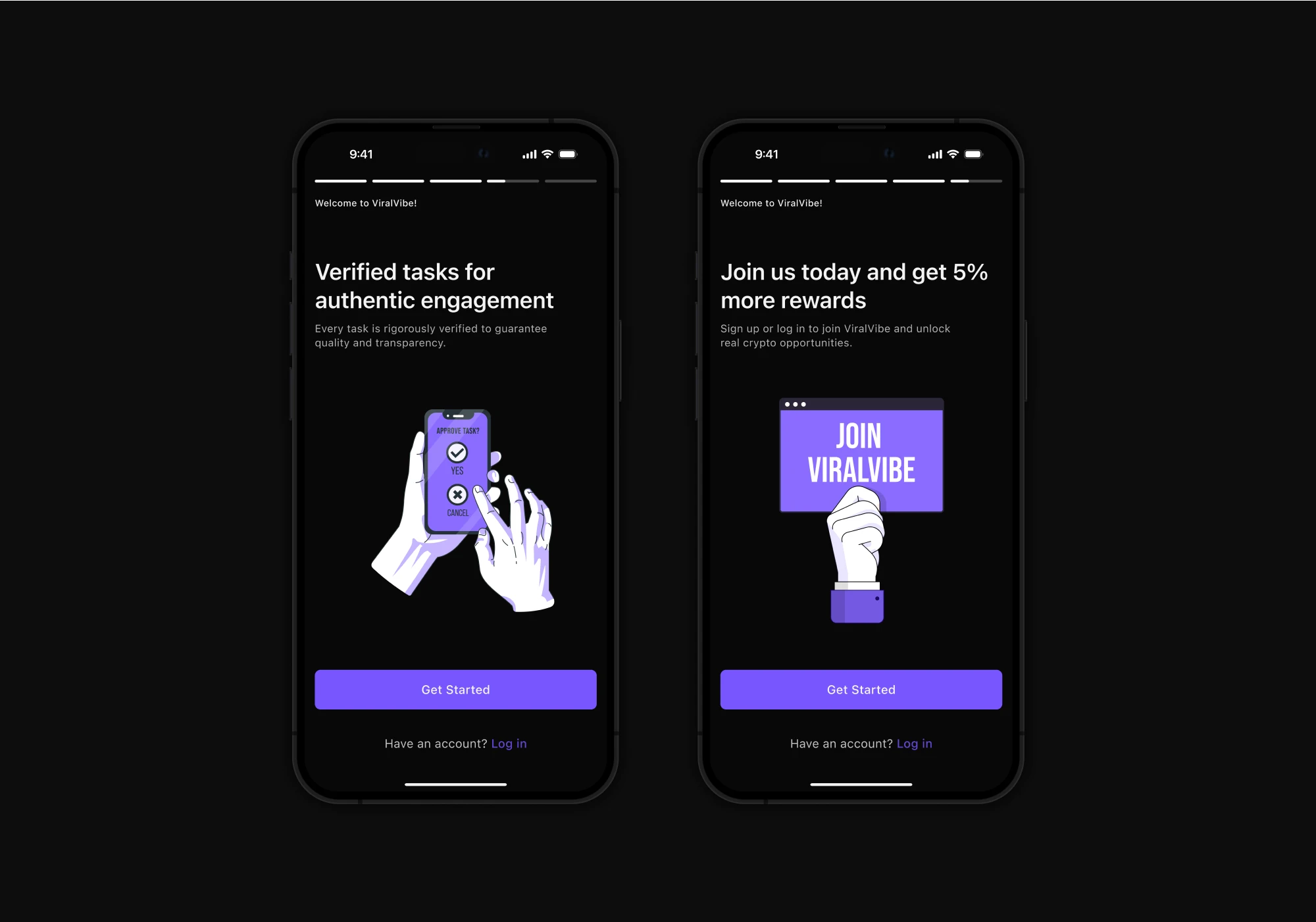
To address this, I designed a story-based onboarding flow that mimics familiar social media experiences. These five introductory screens provide a comprehensive platform overview, significantly reducing cognitive load and creating an immediate sense of familiarity.
0.1 — Onboarding screens
Account Creation
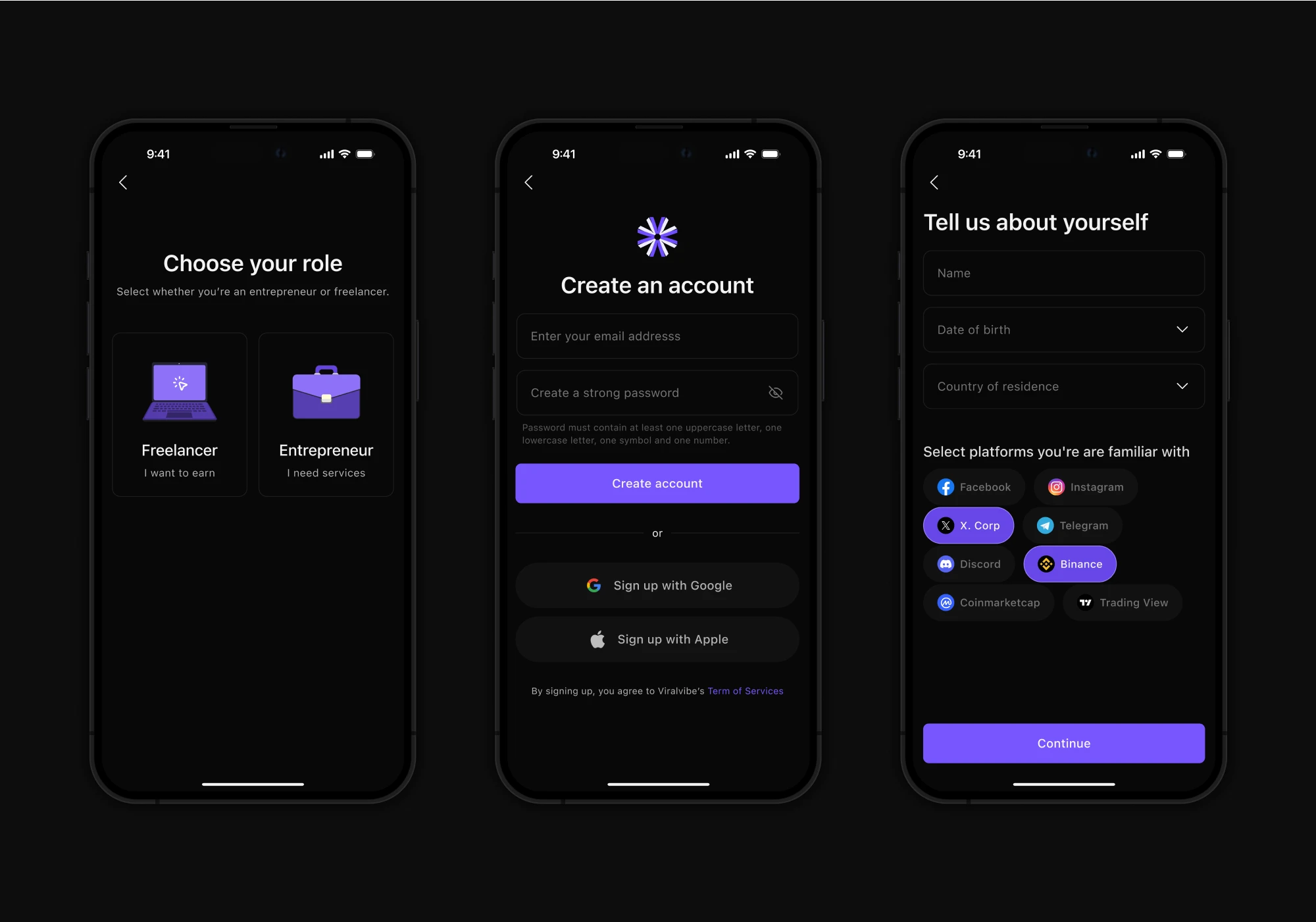
0.1 — Account creation screens
KYC Implementation
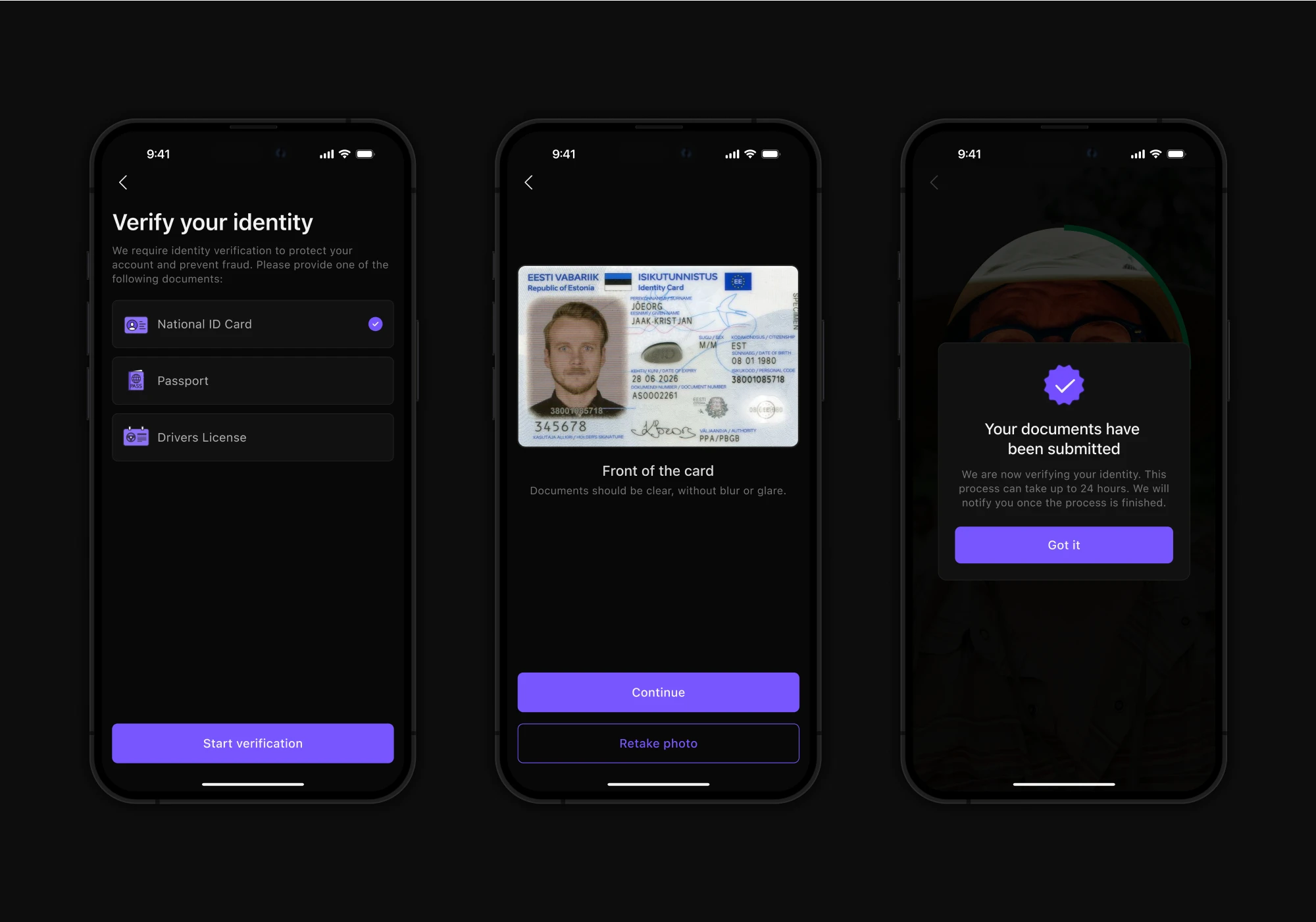
A critical weakness in existing platforms is their inability to verify unique users, allowing individuals to create multiple accounts and potentially compromise work quality. Imagine a scenario where one user creates multiple bot accounts to inflate engagement metrics, undermining the authenticity of the entire platform.
My solution was to integrate a streamlined KYC process that verifies user identity without creating excessive friction. By requiring identity verification during account creation, we ensure each account represents a unique individual. This approach:
- Prevents fake accounts and bot-driven engagement.
- Creates accountability for work quality.
- Builds trust within the ecosystem.
- Establishes the foundation for reputation-building.
0.1 — KYC screens
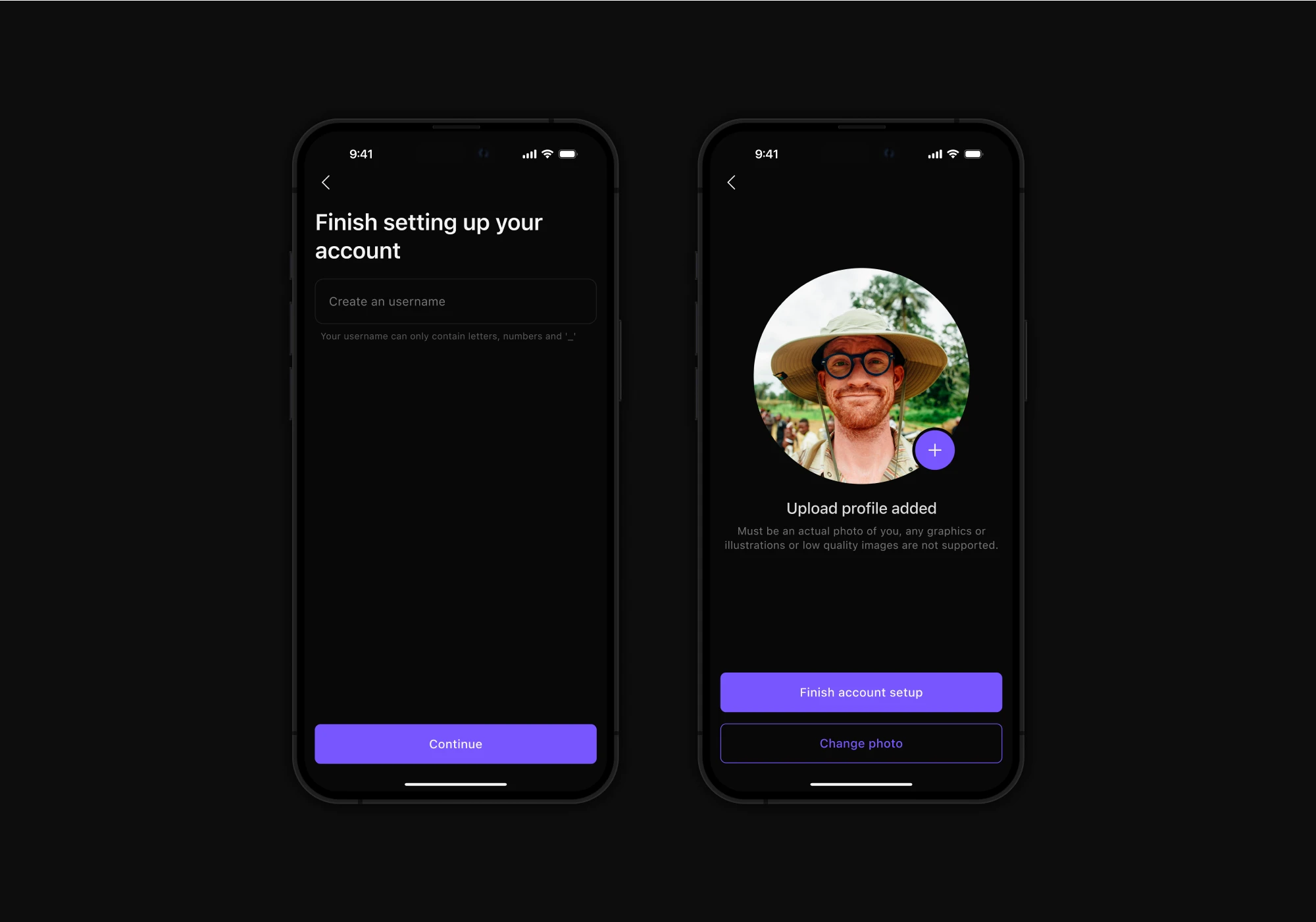
User Profile & Account Setup
0.1 — Account setup
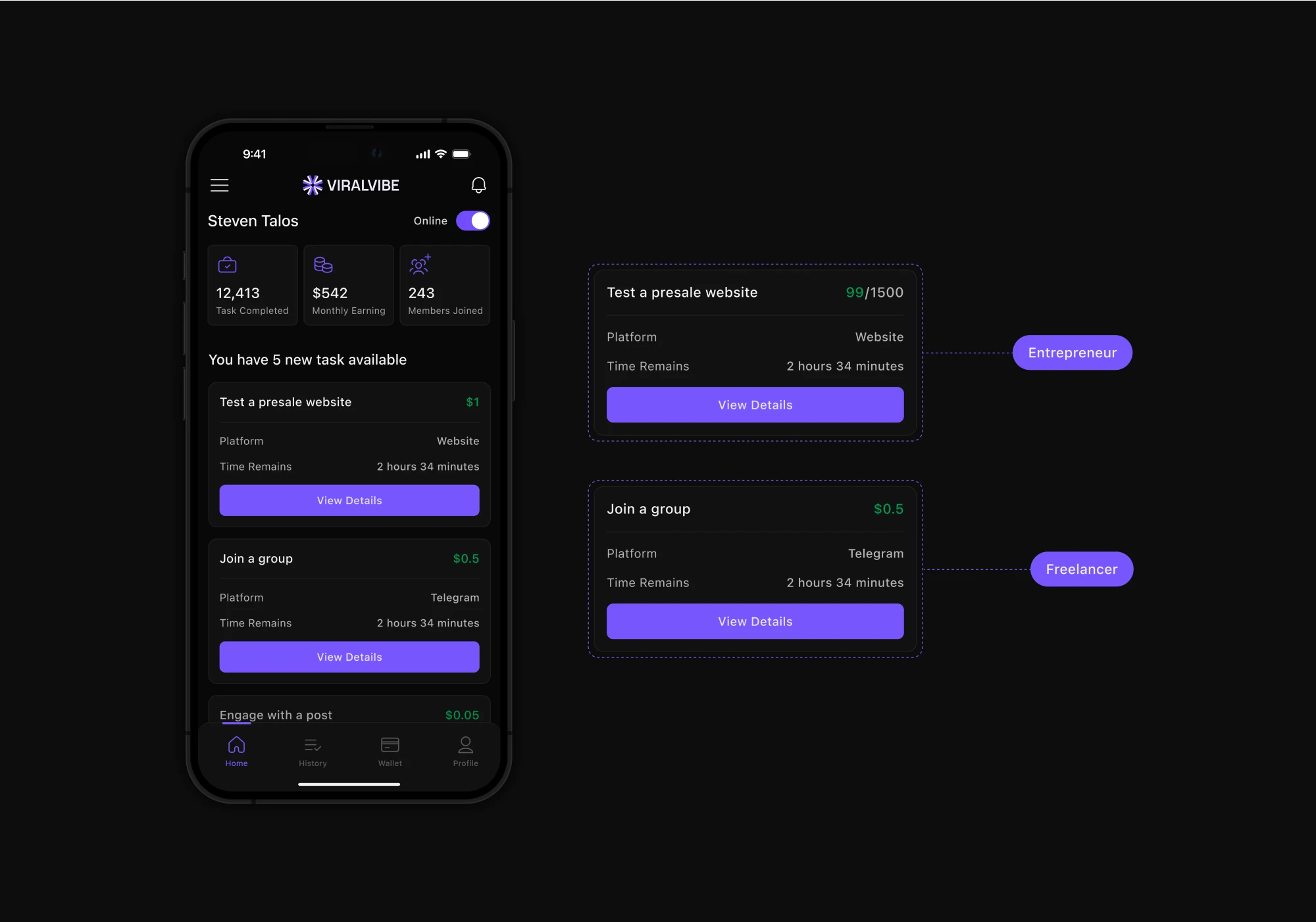
Centralized Dashboard Experience
Fragmented workflows force users to navigate multiple pages or platforms to find tasks or track progress, leading to inefficiency.
To address this, the dashboard serves as the central hub for all user activities:
- Freelancers see available tasks and earnings metrics, such as a list of pending tasks and their estimated earnings.
- Entrepreneurs track purchased services and task progress for each campaign.
This centralization reduces time spent navigating between pages, and a clear information hierarchy prioritizes immediate actions for both user groups.
0.1 — Home page and elements for different users
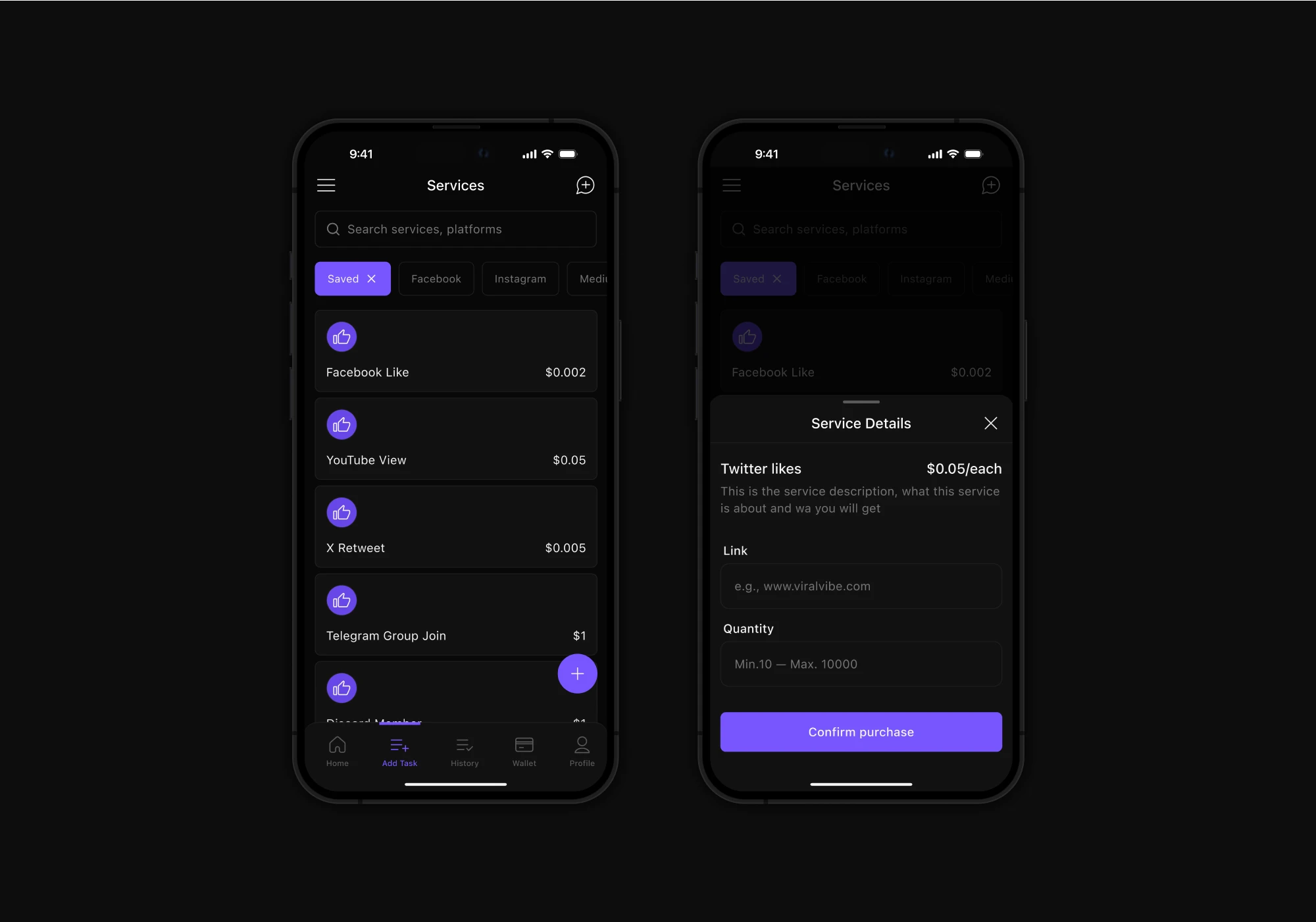
Pre-defined Services and Custom Service Request
ViralVibe provides a curated services marketplace that allows entrepreneurs to browse and purchase pre-defined services (e.g., DApp Testing, NFT Minting) from verified freelancers, or they can request custom services directly.
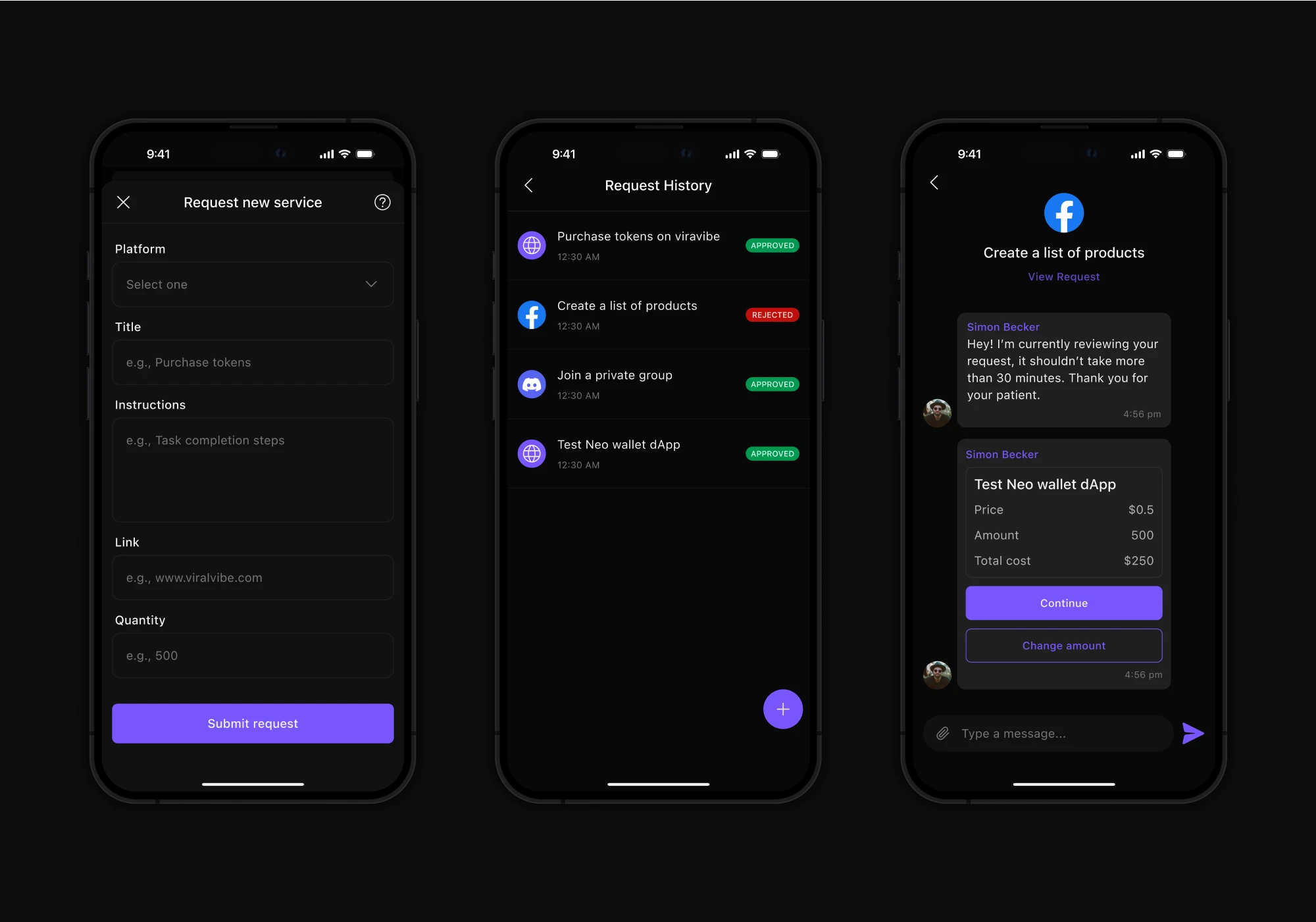
Web3 projects frequently require unique, specialized services. For example, a project launching an animated cyberpunk NFT collection might need targeted Discord server engagement to build hype. Existing platforms lack efficient ways to fulfill these bespoke needs.
To fulfill their needs, ViralVibe introduces a custom service request feature. Entrepreneurs provide details and budgets, which admins review for feasibility and fair pricing. If needed, admins propose custom prices to ensure fair compensation and quality work. Entrepreneurs can then accept, adjust, or revise.
0.1 — Services and details
0.2 — Custom task request
Task Details & Distribution
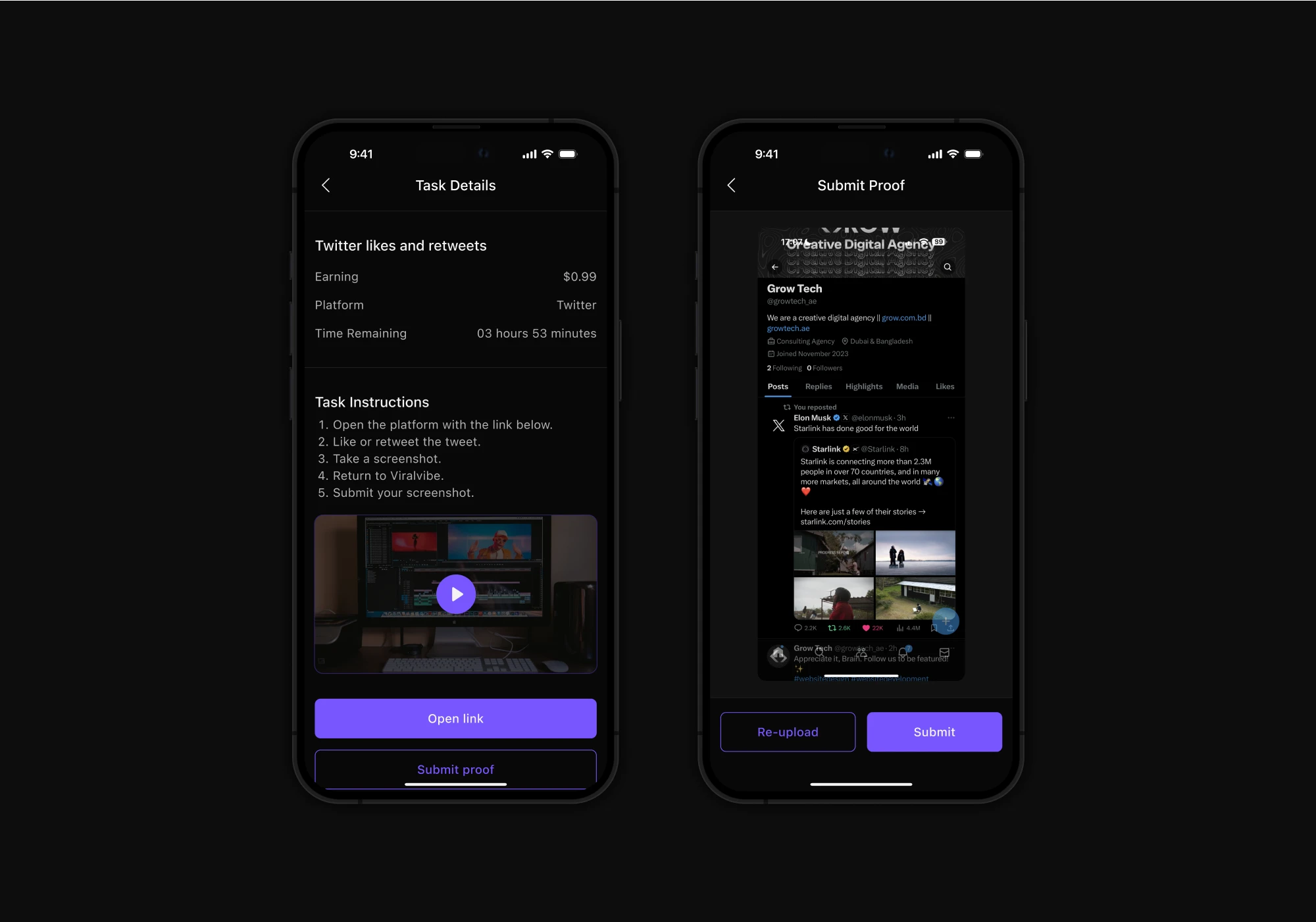
Unclear task instructions were identified as a significant barrier to quality work completion. Imagine a task description that simply says, ‘Promote this tweet,’ without specifying hashtags or target audiences.
I addressed these issues by designing a task detail page that includes step-by-step written instructions, video tutorials, and clear requirements for proof of work (e.g., screenshots, links).
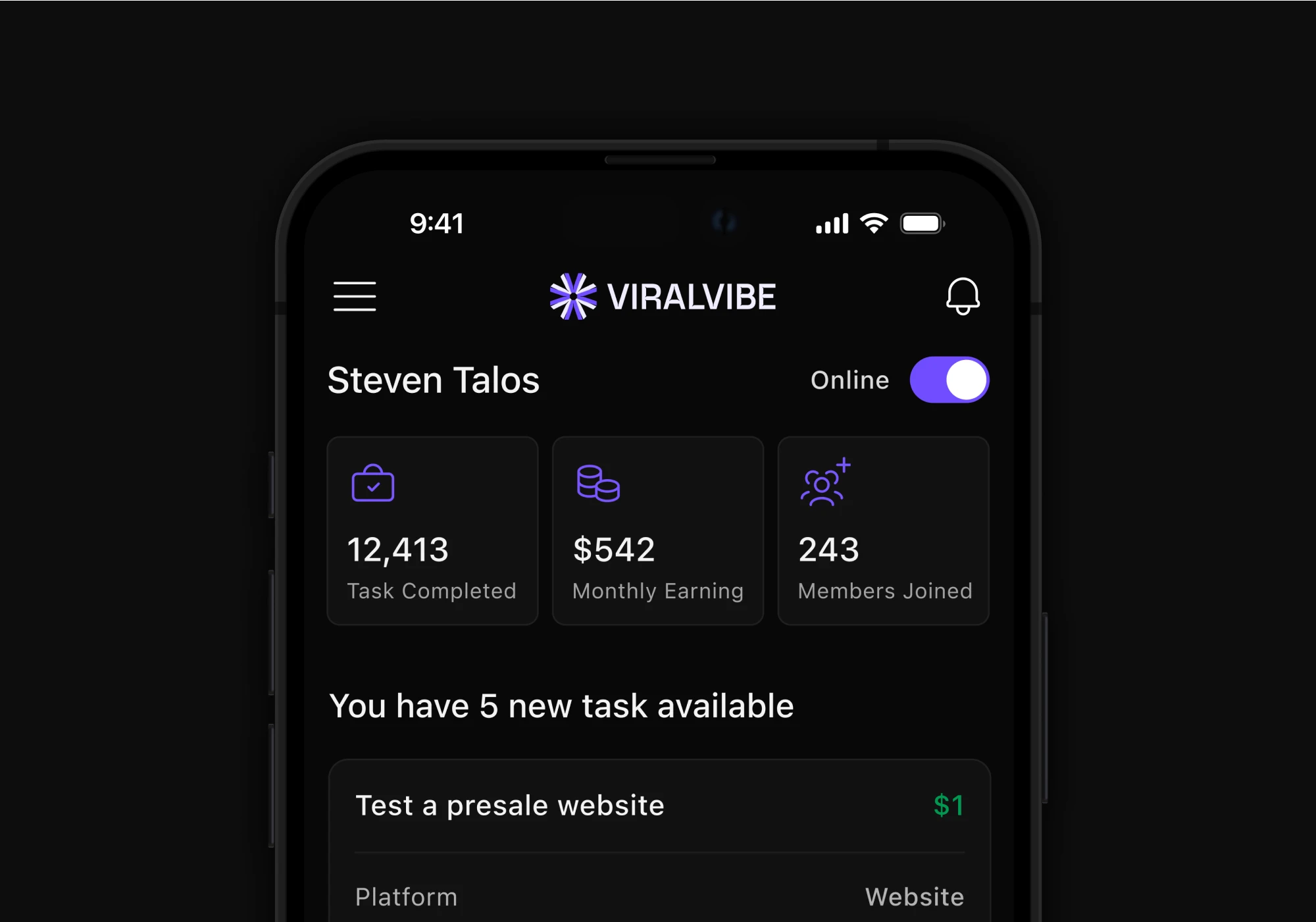
I also introduced an “availability toggle” where freelancers indicate they are ready for new tasks instead of manually accepting them. This approach reduces task abandonment and ensures entrepreneurs receive timely results.
0.1 — Task details and proof submission
0.2 — Availability toogle
Proof of Work System
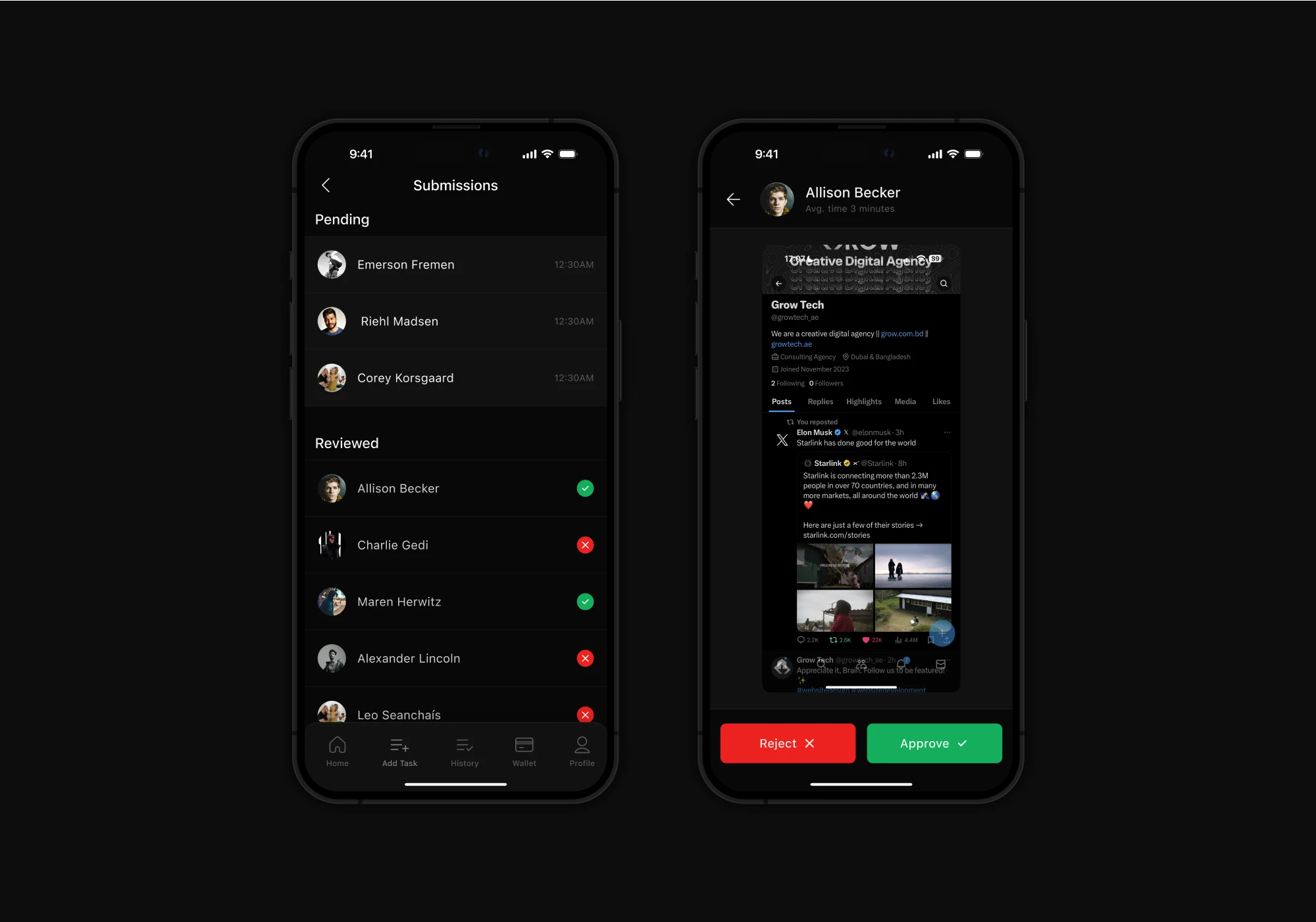
- Freelancers submit clear documentation of their completed work.
- Trained sub-admins review submissions.
- Entrepreneurs can view all proof of work but don’t bear the burden of verification.
- Dispute resolution processes are available but separated from the main workflow.
0.1 — Review submissions
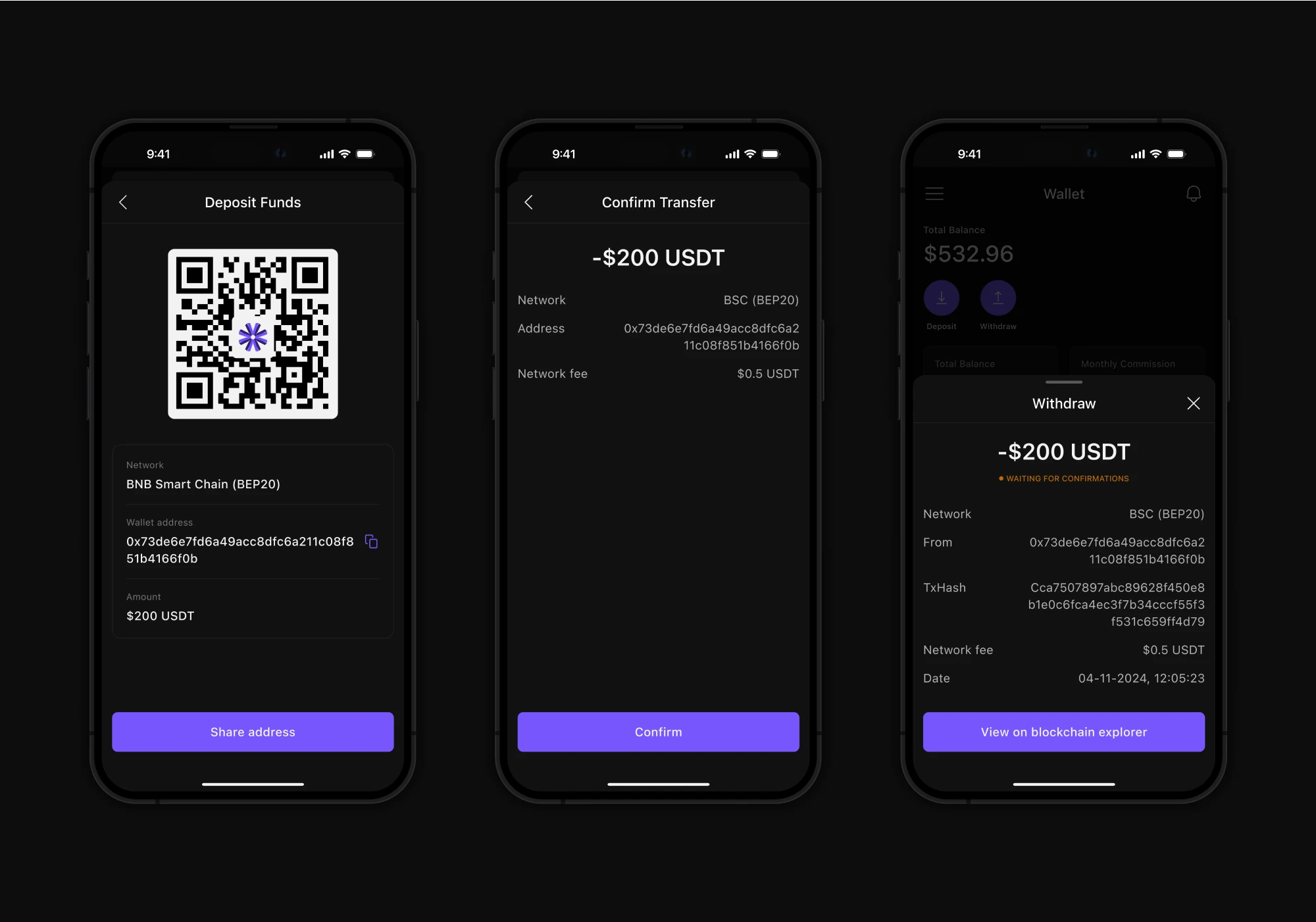
Crypto Wallet Integration
Delayed payouts significantly reduce freelancer motivation and platform stickiness. Traditional platforms often implement minimum thresholds and lengthy withdrawal processes that frustrate users. Imagine waiting weeks to withdraw earnings from completed tasks.
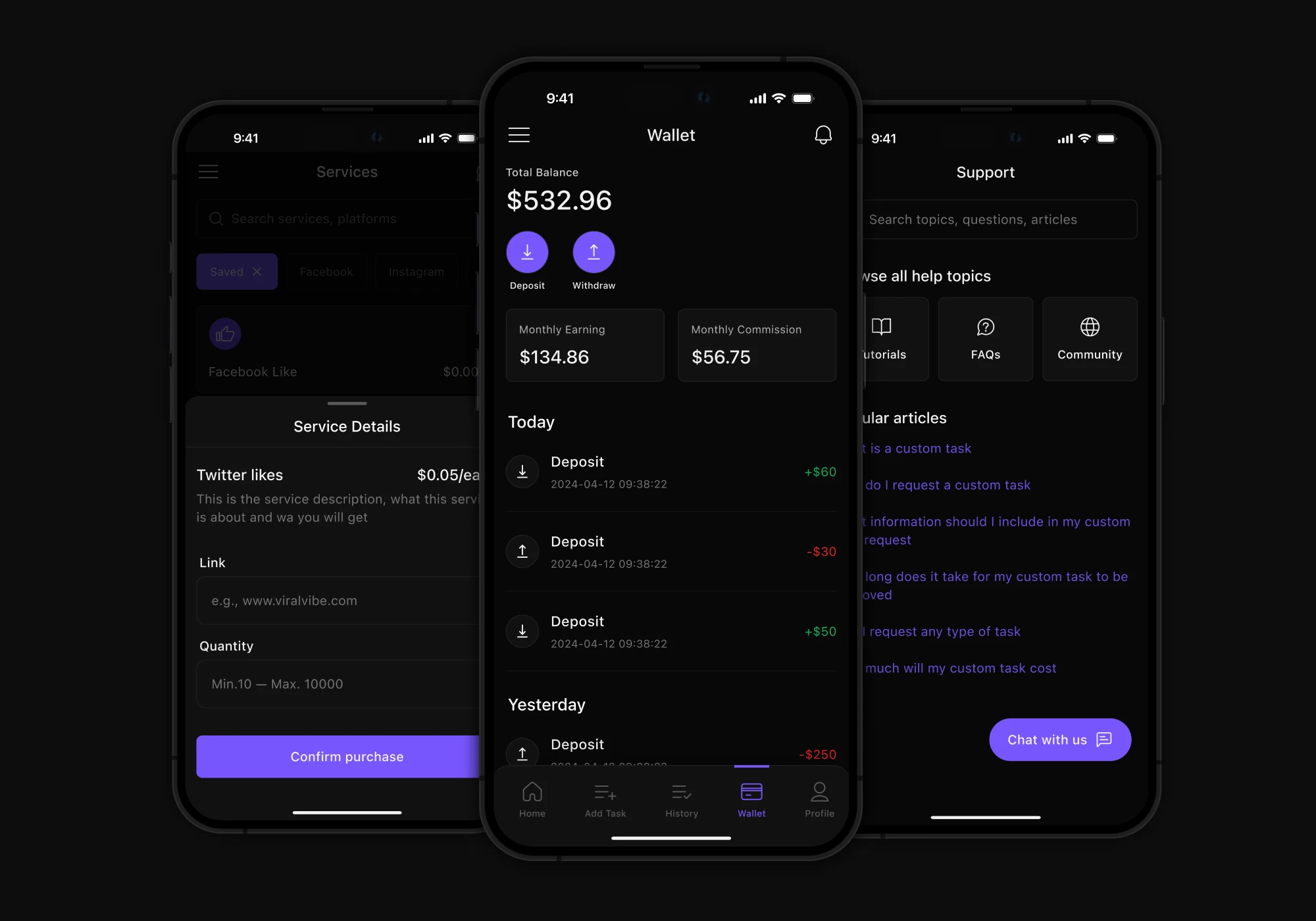
I designed a built in crypto wallet:
- Immediate earnings display after task verification.
- No minimum withdrawal thresholds.
- Multiple stablecoin options for payment.
- Simple withdrawal process with transaction tracking.
Instant payouts motivate freelancers to stay active on the platform, and transparent transaction tracking builds confidence in the payment system.
0.1 — Wallet
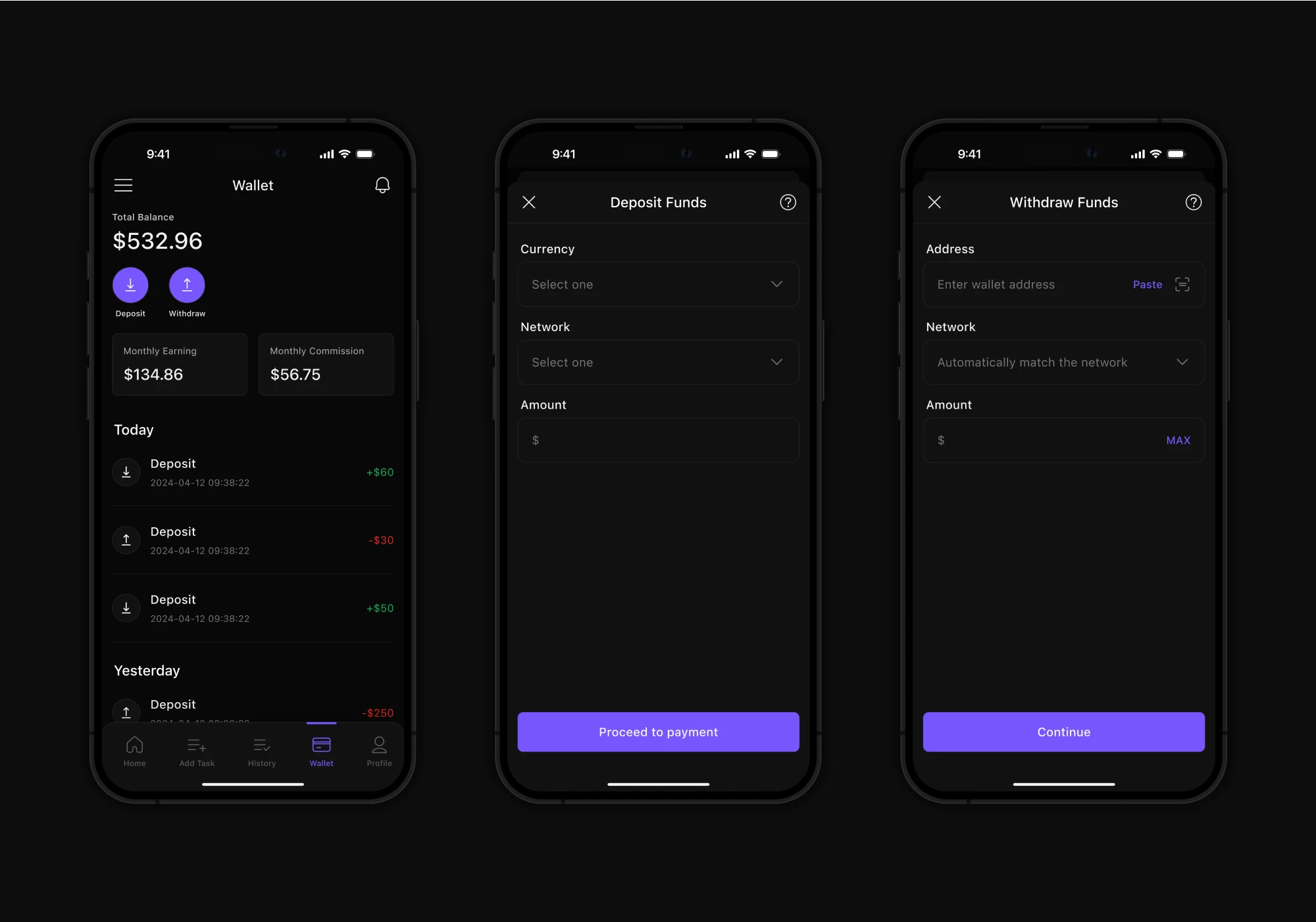
0.2 — Fund transfer
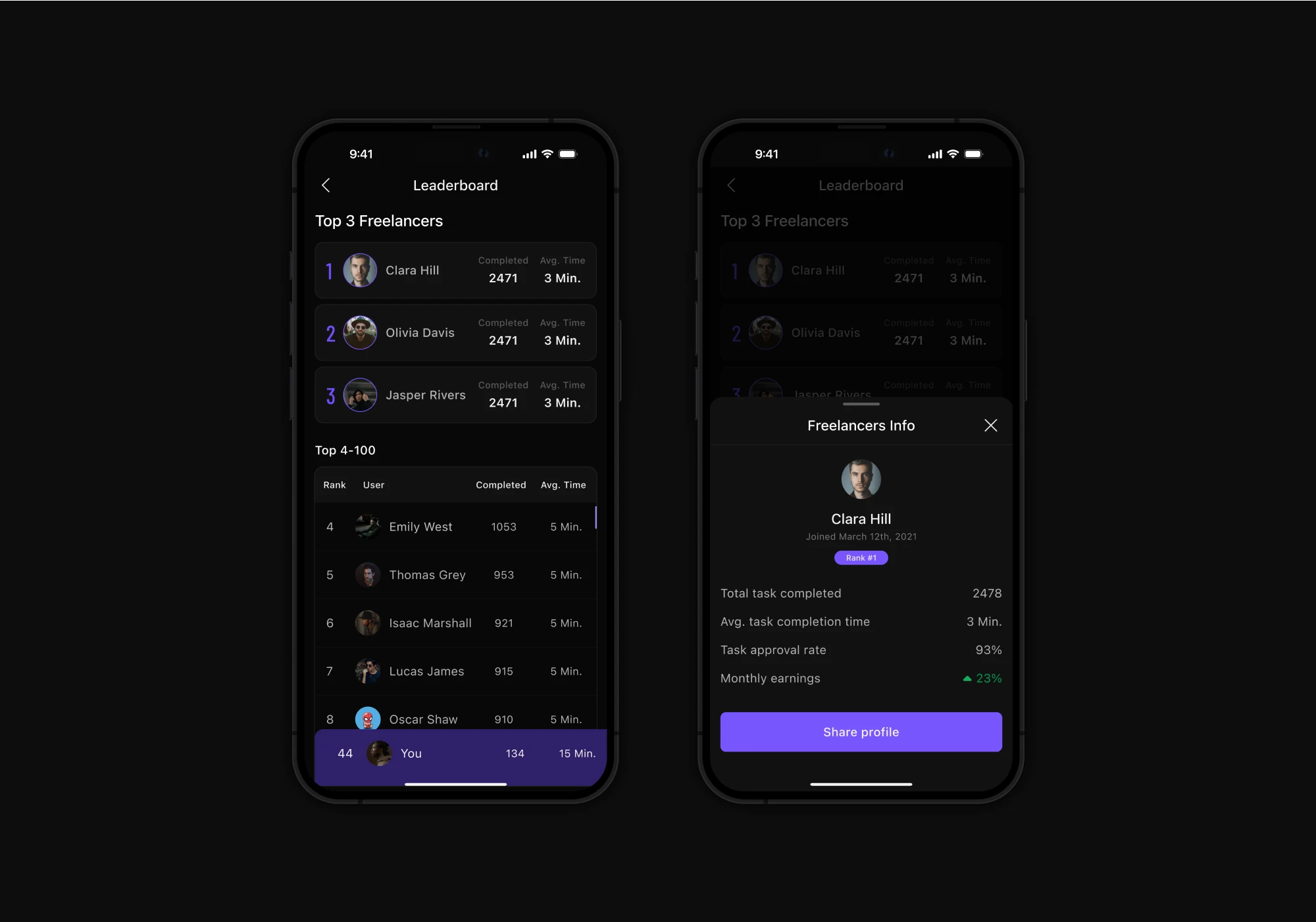
Leaderboard
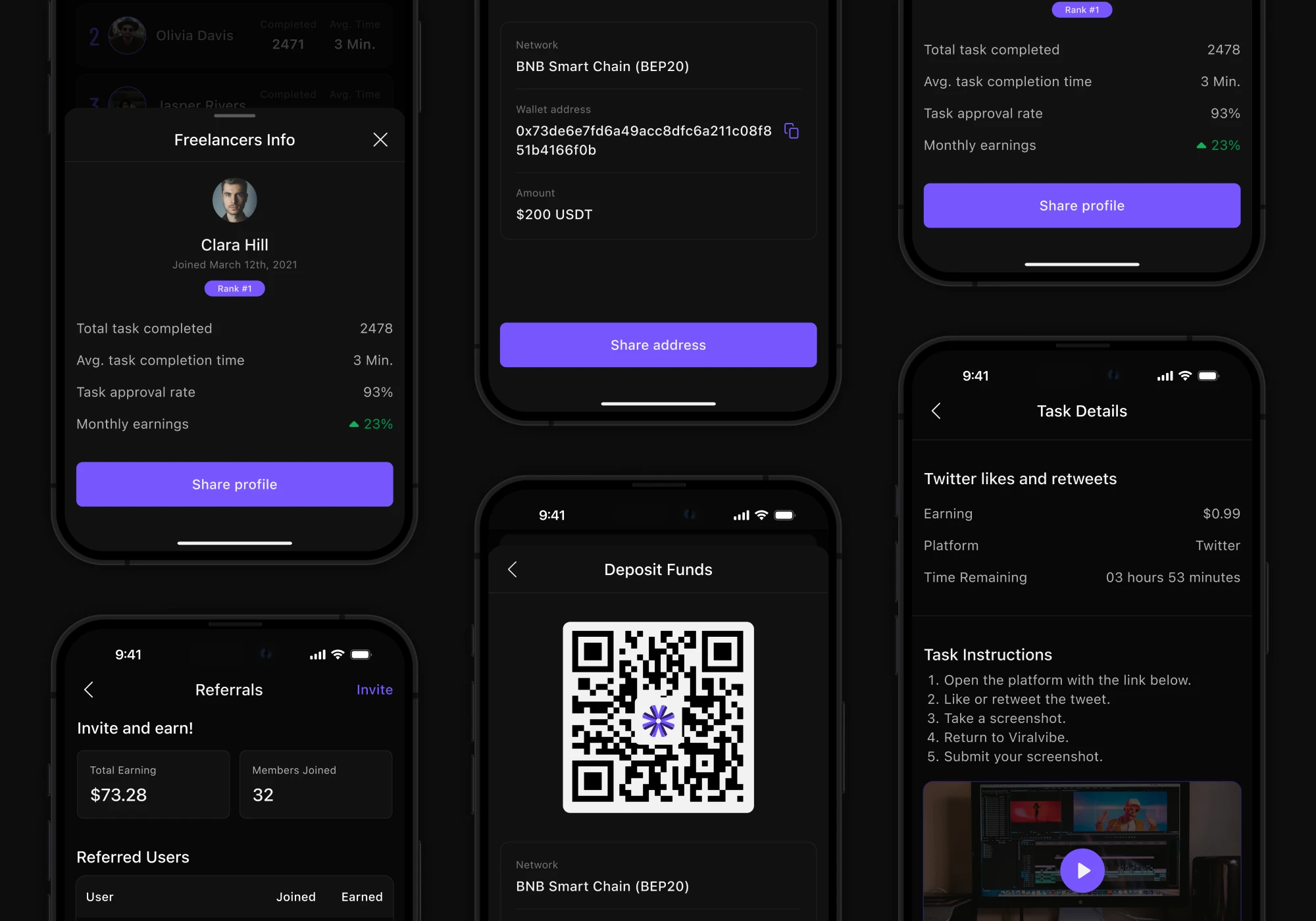
0.1 — Leaderboard and freelancers profile
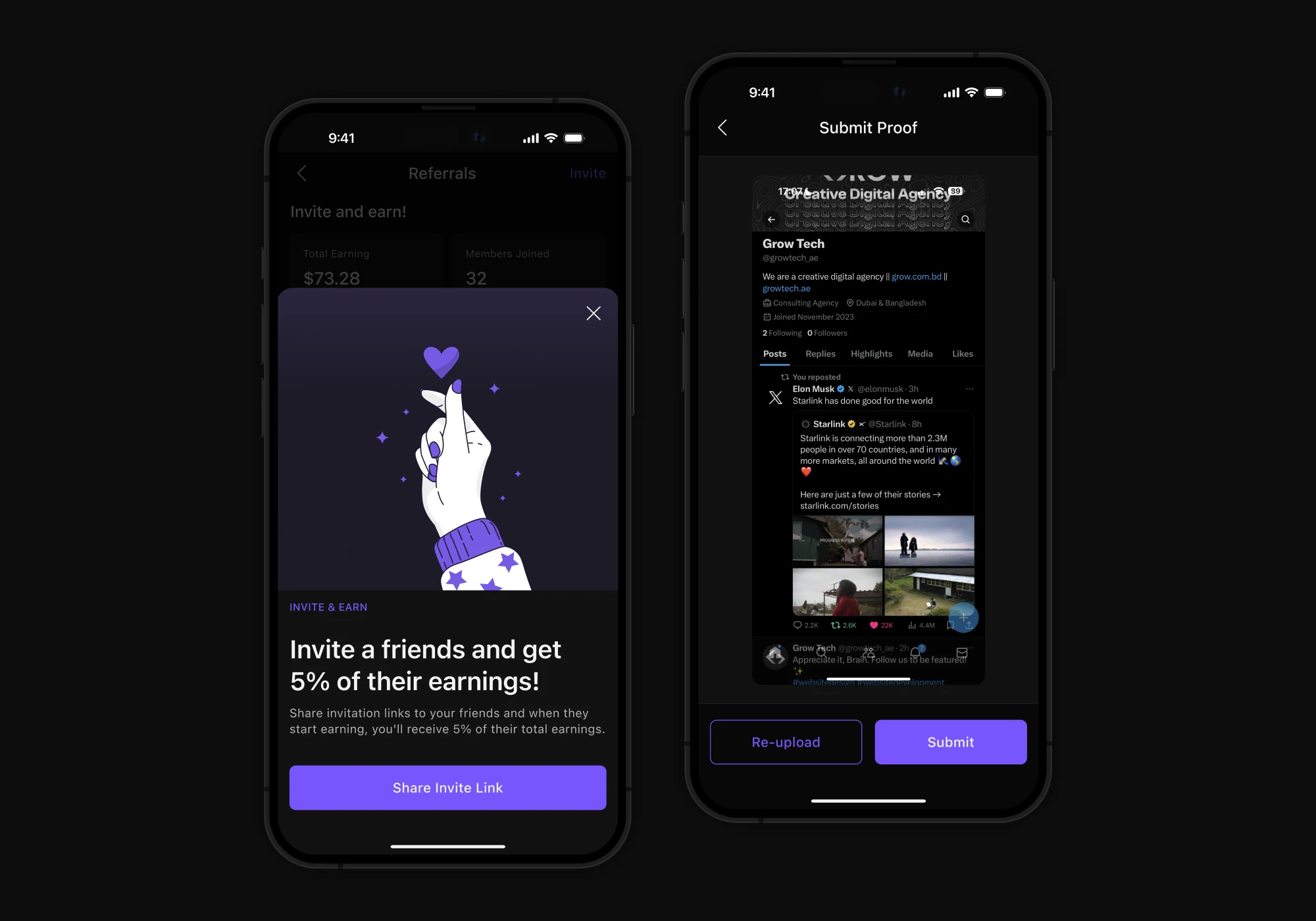
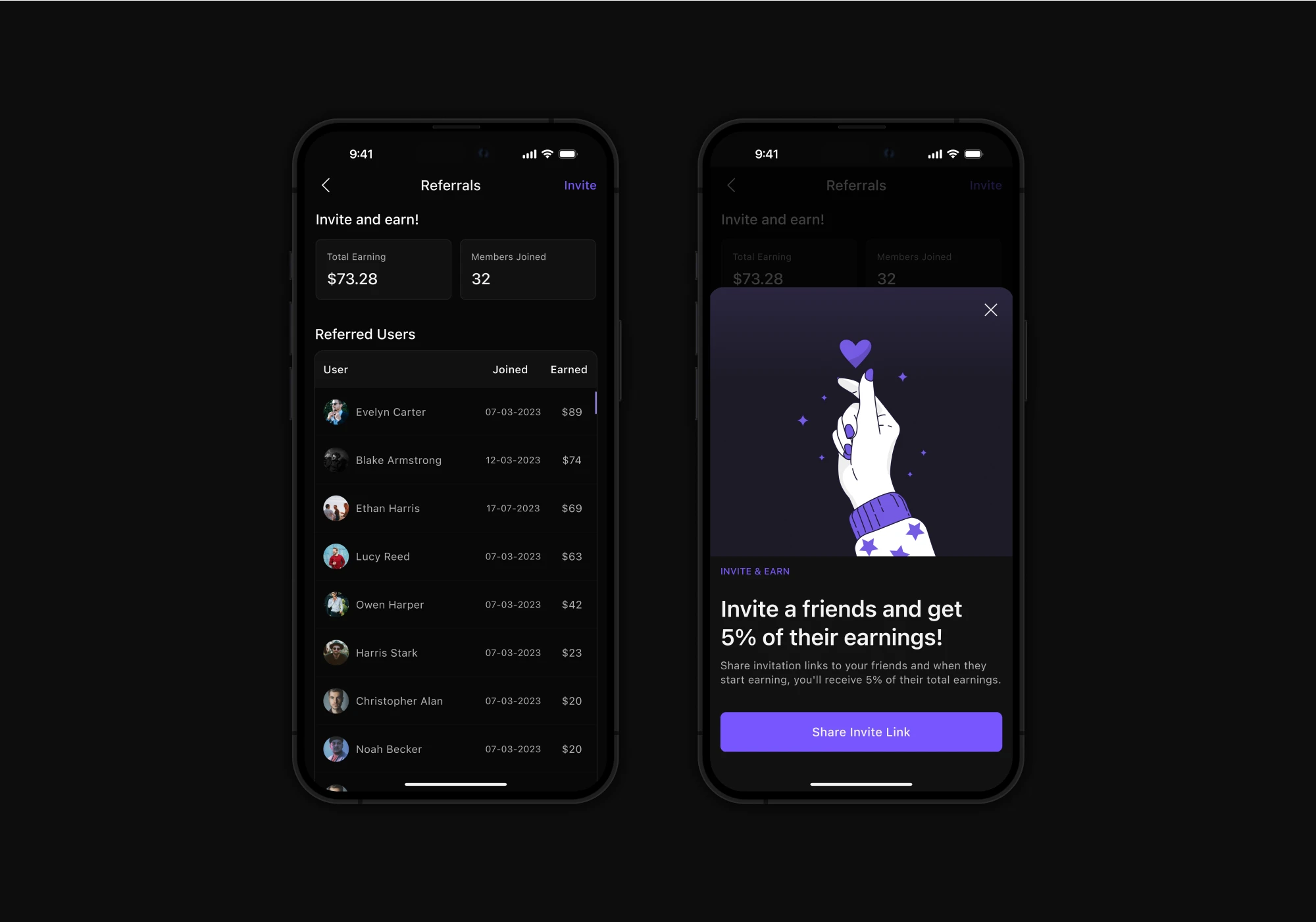
Referrals
0.1 — Referrals
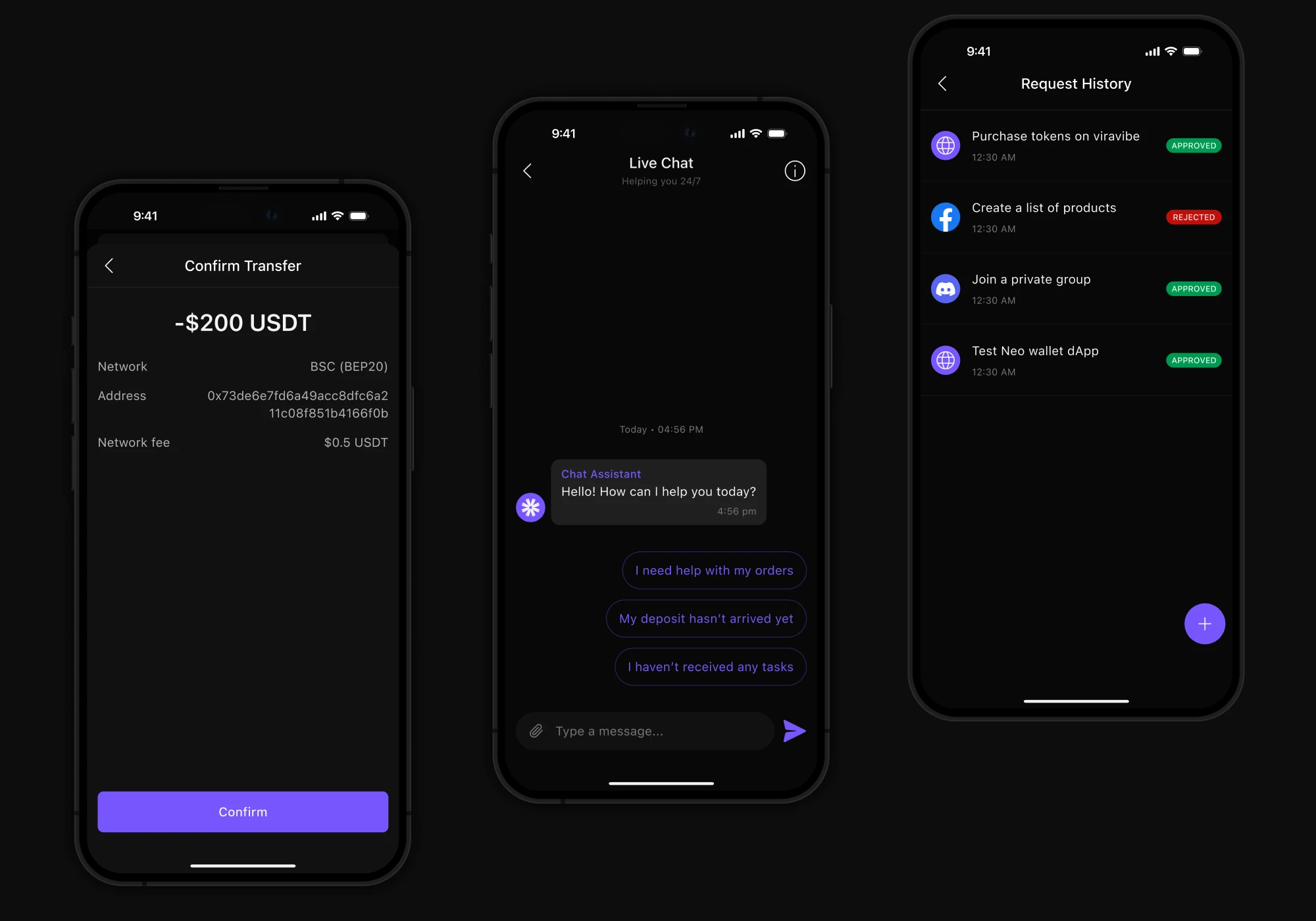
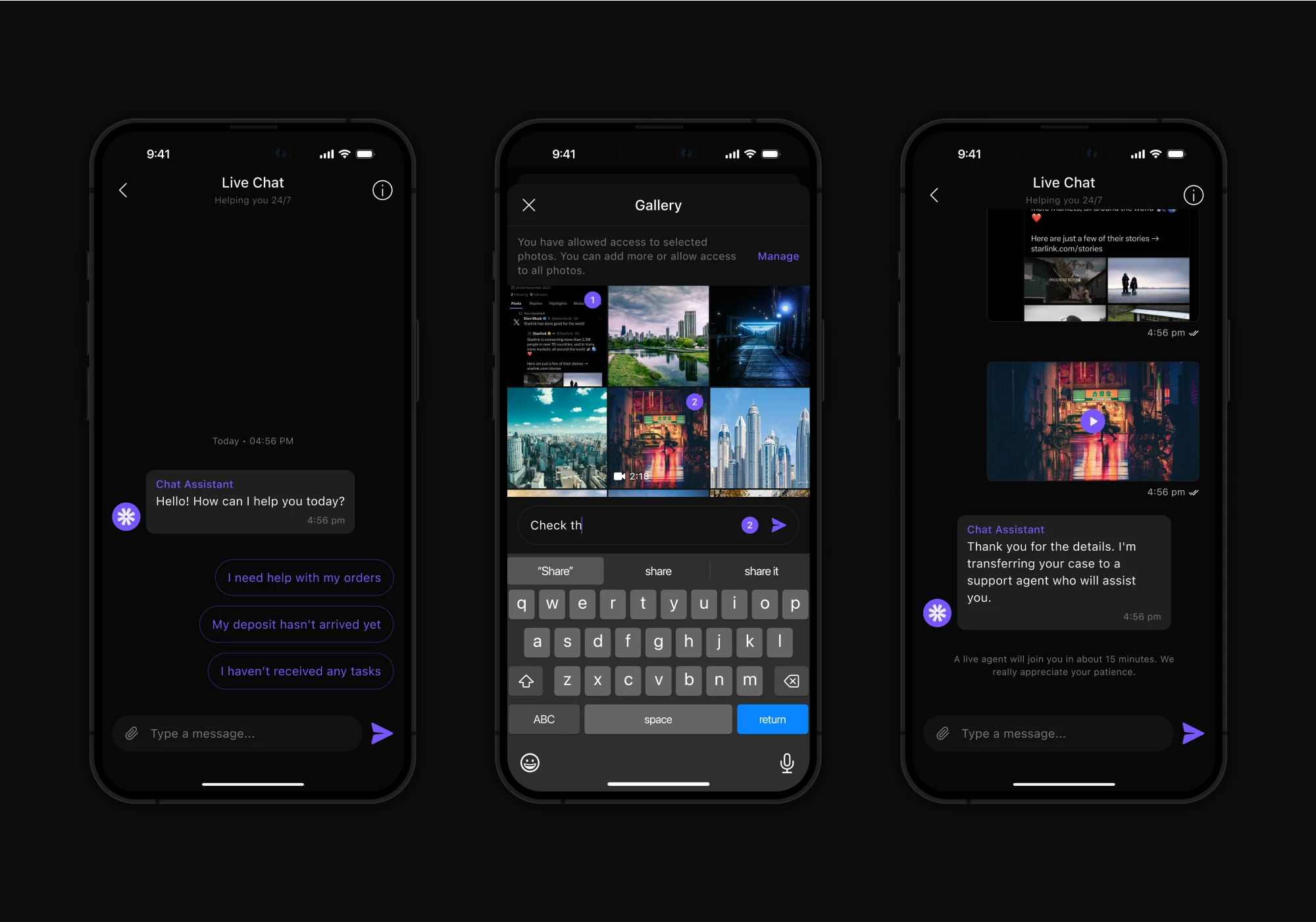
Help and Support
0.1 — Help and support
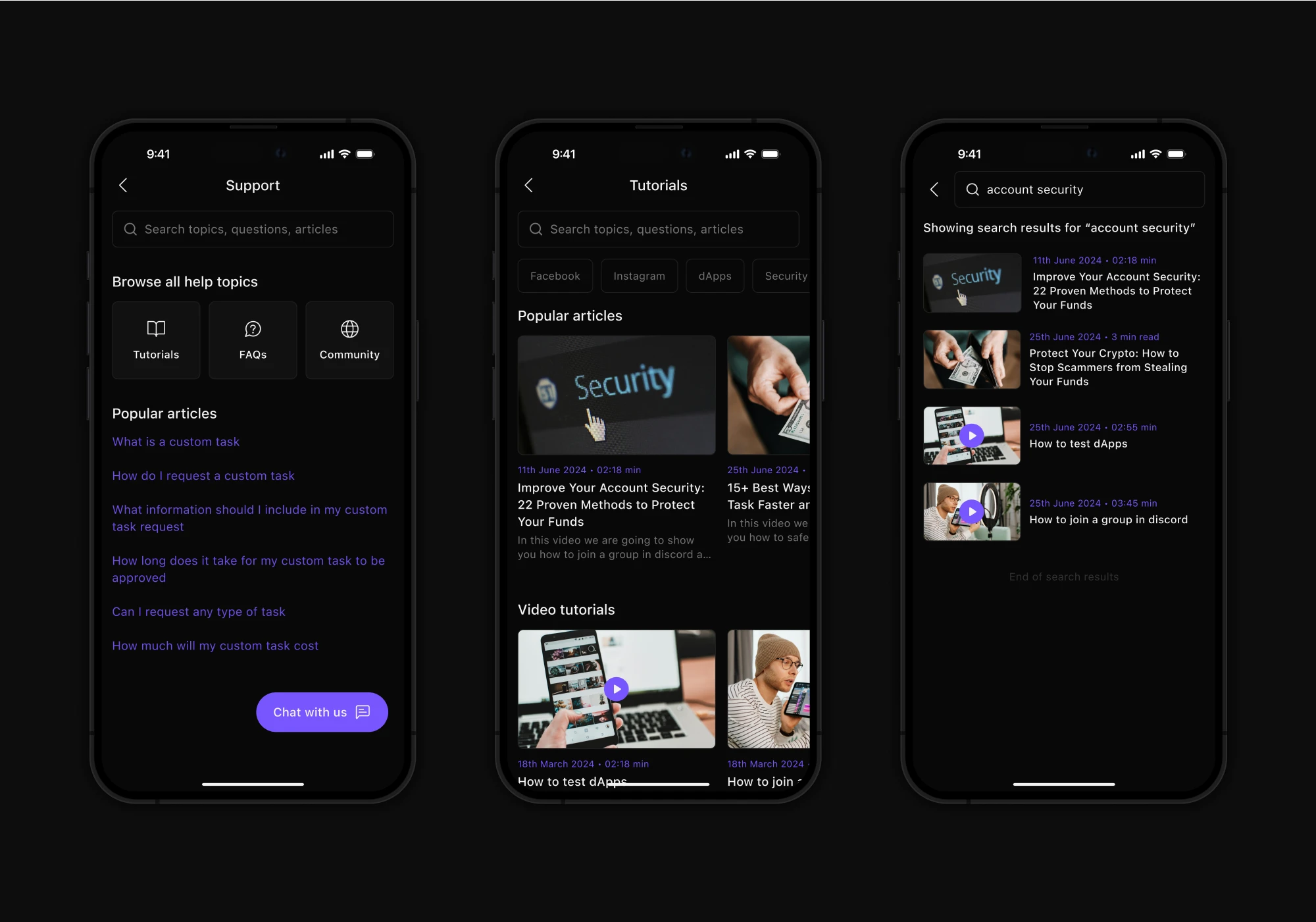
0.1 — Support live chat
User Feedback
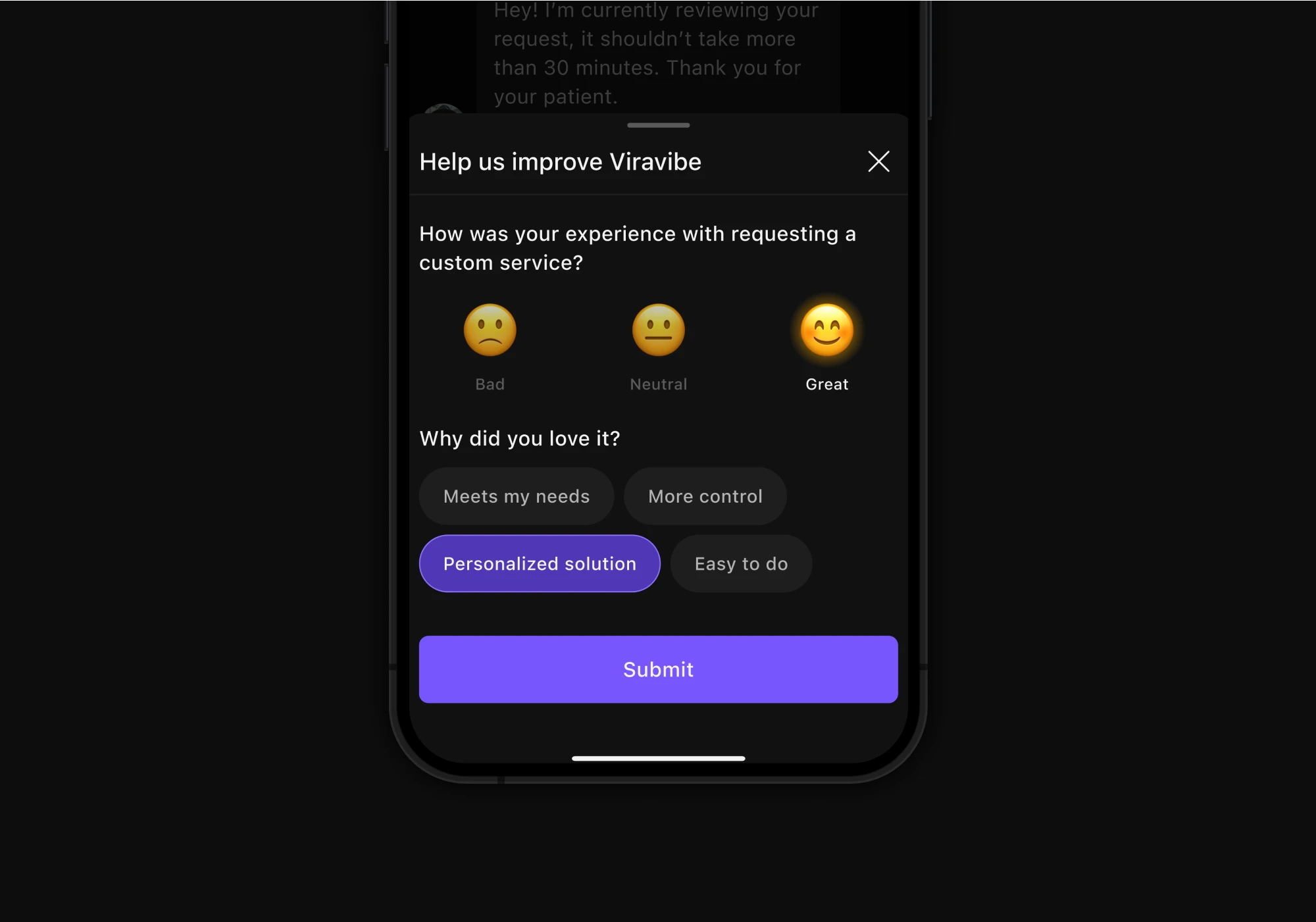
To make data-informed improvements, feedback loops were embedded throughout the app’s user journey. This included prompts for ratings, task completion surveys, and contextual feedback forms. By collecting user data at key interaction points, we will be able to directly measure user satisfaction and identify areas for design optimization.
0.1 — Feedbacks
Key Metrics for Platform Assessment
Freelancer Task Completion Rate
I want to track the ratio of completed to assigned tasks in order to identify bottlenecks, uncover usability issues, and improve overall task performance.
Entrepreneur Service Purchase Rate
I want to measure service purchases and custom task requests in order to optimize the purchase funnel and make services easier to discover.
Submission Verification Accuracy
I want to maintain at least 95% verification accuracy among sub-admins in order to ensure trust and consistency in proof validation. This will involve creating clear guidelines, training, and random QA checks.
User Satisfaction and Feedback
I want to gather user feedback at critical touchpoints in order to continuously refine the experience and address pain points quickly.
What I've Found
Key Learnings and Limitations
This project significantly advanced my ability to design for complex Web3 platforms, emphasizing the unique needs of diverse user groups like entrepreneurs and freelancers.
I gained practical experience integrating blockchain and crypto wallets, refining my user research and information architecture skills to create intuitive user flows. This experience shaped me into a more strategic, data-informed designer, capable of navigating evolving tech spaces.
Scaling Human Review
While sub-admins ensure quality, reviewing tasks manually slows down the platform as it grows. Current API or AIs aren’t advanced enough to handle complex reviews.
Maintaining Quality
With many different task types, ensuring consistent quality is difficult. Developing automated ways to measure quality objectively is still a challenge.
Fighting Advanced Fraud
Even with KYC, advanced fraud and botting techniques continue to evolve. This requires constant updates to our security measures.